
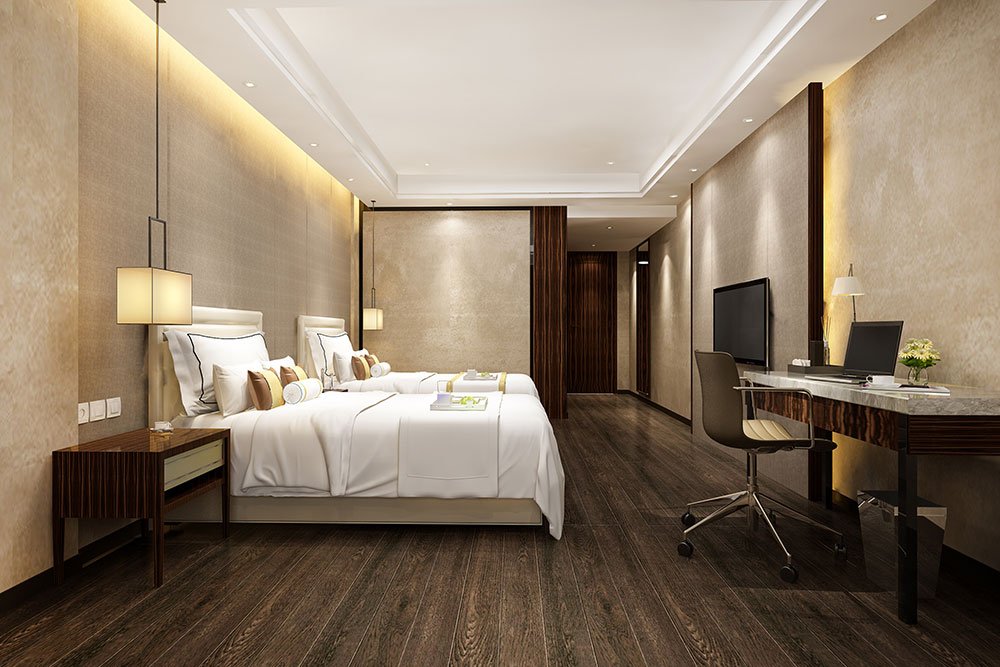
Salt stays outside, guests stay safe, floors stay beautiful.
A winter entry that looks elegant at 5 p.m. and still safe at midnight is not an accident. It’s the result of a layered system, a short daily routine, and one maintenance move that blocks salt from biting into the finish. Use this plan to control grit, preserve traction, and keep the lobby camera-ready through storm season.
I. Three-stage entry that actually works
Install all three. If you skip one, the system leaks salt.
- Stage 1: Scraper grate outside. A recessed metal grate or rigid bristle mat removes the big stuff before guests cross the threshold. Maintain daily. Clear packed slush so it keeps scraping instead of skating.
- Stage 2: Absorbent mat inside. Place a heavy-duty, launderable textile just inside the door to capture meltwater. Choose dark, patterned fabric to mask specks. Backing should be non-staining and rated safe for finished wood and adjacent tile.
- Stage 3: Zoning runner to the host stand or front desk. This is your traffic lane. Size it so the average guest takes at least five steps on textile before wood. In hotels, extend to the check-in queue turn.
Pro tip: Duplicate the system at service entries. Delivery salts chew finishes faster than guests do.
II. Which de-icers stain and which are gentler on finishes
All tracked de-icers are bad for lobby floors if they reach the finish wet. Some leave more residue than others.
- Sodium chloride and calcium chloride: common and effective outdoors, but they leave alkaline films that can haze finishes if not neutralized promptly.
- Ice-melt blends with dyes or anti-caking additives: more likely to leave visible streaks indoors.
- Operational stance: use whatever your exterior team needs for slip control outside, then stop and neutralize at the door. The interior fix is fast removal, absorbent mats, and pH-neutral cleaner inside. Vinegar and ammonia are out. A true neutral cleaner preserves traction and clarity.
III. Mat sizing by occupancy class
Match coverage to traffic volume and baggage patterns.
- Full-service hotels and busy restaurants: target 20 to 30 feet of total walk-off (grate + interior mats + runner). Ensure the runner reaches the first decision point: host stand or queue.
- Boutique hotels and mid-volume dining: 12 to 20 feet. Still capture five steps minimum before wood.
- Banquet nights or event days: extend with temporary runners through the queue serpentine and toward elevators. Protect elevator thresholds with removable walk-off tiles.
Laundering cadence: storm weeks demand daily or every-other-day laundering. Damp mats re-deposit salt.
IV. Seam and threshold protection where tile meets wood
Transitions are the weak link.
- Threshold guards: use low-profile metal or wood transitions that present a clean break for cleaning tools. Avoid rubber that can mark finishes.
- Seal the micro-gap: a tiny, flexible seal at the tile-to-wood junction blocks brine from wicking under boards.
- Edge passes: schedule a daily microfiber edge pass along thresholds and baseboards. Salt hides at margins first.
V. Housekeeping SOP for storm days: timing, tools, neutralizer ratios
Keep this simple and repeatable. Set it as a card in the housekeeping app.
Tools
- 36- to 48-inch microfiber dust mop with spare pads
- pH-neutral hardwood cleaner and labeled spray bottles
- Two-bucket caddy: one for damp pads, one for dry
- Hand towels for immediate blotting at the door
- Wet-floor signs for guest safety
Ratios and routine
- Open and close: dry dust mop the lobby and runners. Swap dirty pads immediately.
- Every 60 to 90 minutes during storms: spot-neutralize visible rings and footprints. Light mist of neutral cleaner on a microfiber cloth, wipe, dry with a second cloth.
- Mid-shift damp pass: lightly damp microfiber along traffic lanes, wrung nearly dry, followed by a dry pad. Liquids and seams are not friends.
- Mat service: when the interior mat feels wet underfoot, it is late. Swap it. Keep a clean stack ready.
- Final check: edge sweep and threshold wipe before the dinner rush or check-in peak.
If a lane looks dull but brightens when slightly damp, the wear is in the finish. That is your signal to schedule a maintenance recoat, not a full sand. Our recoat process is a clean, a light screen to key the surface, and two finish coats to reset protection and sheen.
VI. How a quarterly screen and coat keeps salt from biting into finish
Salt plus grit plus foot-turns at the host stand abrade the top film all winter. A planned quarterly screen and coat lays down fresh protection before damage cuts into the color layer.
- What you get: brighter look, higher clarity over game lines or directional inlays, and easier daily cleaning.
- Downtime: low odor, short dries with water-based systems, and multiple coats in a day under pro supervision.
- Budget control: recoats stretch finish life and defer costly full refinish cycles.
Royal Hardwood Floors delivers residential and commercial refinishing across Ottawa, including restaurants, stores, and governmental sites, with a century-long track record.
VII. Guest safety and brand image: small tweaks with big effect
- Benches at entry: give guests a sit-down spot to change footwear. Safety improves and mats last longer.
- Polish discipline: avoid silicone or oily “restorers.” They smear, attract soil, and wreck traction.
- Chair and luggage feet: install non-marking glides on dining chairs and bell carts. Inspect weekly so grit doesn’t turn pads into sandpaper.
VIII. Winter calendar for properties that stay open late
- Daily: open/close dust pass, hourly spot-neutralize during storms, swap mats as needed, edge sweep before peaks.
- Weekly: launder mats, deep clean under runners, inspect thresholds and elevator edges, vacuum under front-desk overhangs.
- Monthly: check felt and rubber feet on all movable furnishings, audit neutral cleaner inventory, log any dull lanes that brighten when damp.
- Quarterly: schedule screen and coat for the lobby and primary lanes. Pair with any small paint touch-ups or logo inlay refresh.
Proofpoint
We’ve been Ottawa’s only third-generation hardwood specialist since 1922, with work across residential, commercial, and governmental buildings, including restaurants and high-profile institutions.
Quick checklists
Three-stage entry
□ Exterior scraper grate cleared daily
□ Interior absorbent mat, laundered on storm days
□ Long zoning runner to host stand or desk
SOP essentials
□ Neutral cleaner, labeled bottles
□ Microfiber pads, dry and damp sets
□ Edge sweep and threshold wipe scheduled
Protection moves
□ Flexible seal at tile-to-wood
□ Non-marking glides on chairs and carts
□ Quarterly screen and coat on calendar
FAQs
What cleaner preserves traction in lobbies?
A true pH-neutral hardwood cleaner applied lightly on microfiber. Avoid vinegar, ammonia, and oily restorers.
How much walk-off matting do we really need?
High-traffic hotels and restaurants should target 20 to 30 feet total from grate to runner. Smaller venues can work with 12 to 20 feet, but still aim for five steps before wood.
Which ice melters are worst for finishes?
Chloride-based products leave alkaline films that haze finishes if tracked in wet. The fix is immediate capture at the door and neutral cleaning inside.
How often should we recoat in winter?
Plan quarterly for the heaviest lobbies. If the floors brighten when damp, schedule sooner.
Do recoats smell or require closure?
Water-based systems are low odor with short dries, allowing multiple coats in a day and rapid return to service under supervision.
Book A Free Quote!
Book a lobby entry audit and mat spec review. We’ll measure footfall paths, tune your three-stage system, set a storm-day SOP, and schedule a quarterly recoat so the finish stays ahead of winter.
Serving Ottawa since 1922 as the only third-generation hardwood specialist in the region.