
Winter brings wet boots, salty grit, and the urge to deep clean.
A steam mop promises fast sanitizing and streak free shine. Hardwood asks for something else. Wood breathes with the seasons. Your finish is a protective film that keeps moisture on the safe side of the surface. Pressurized vapor defeats that film and sneaks into seams. The result is slow, quiet damage that shows up as haze, edge lift, and dull traffic lanes by the time spring light arrives. Here is a clear, Ottawa specific guide to what steam does, how damage appears, and the safer routine that preserves beauty for decades.
Proofpoint. Royal Hardwood Floors is Ottawa’s only third generation hardwood specialist. Since 1922 our family has restored and protected floors in residences, heritage homes, embassies, and managed properties across the region.
I. What steam actually does to a finished floor
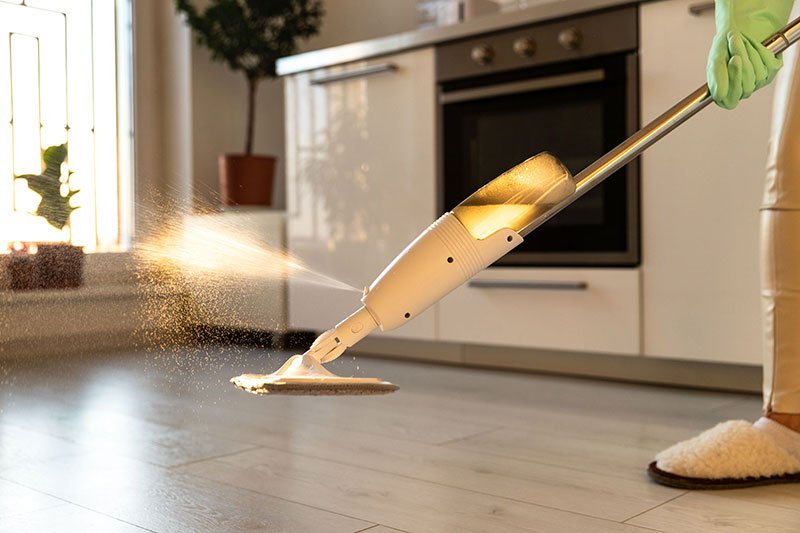
A steam mop forces superheated moisture through a pad. That vapor is driven across micro checks in the finish and into the weakest points at board edges and end joints.
- Heat softens finish films. Waterborne and oil modified polyurethanes become more flexible as temperature rises. If you soften the film and move gritty slurry across it, micro abrasion blooms.
- Vapor penetrates edges. Pressurized moisture slips into the tongue and groove, wets raw fibers, and lifts the film at the seam. The halo it leaves behind never blends quite right.
Day one may look clean. Weeks later you begin to see clouded sheen and raised edges that catch the fingernail.
II. How damage appears in real homes and condos
- Whitening at seams. Moisture trapped under film dries milky.
- Edge lift and ridging. Repeated wet and dry cycles swell, then set a faint ridge.
- Bevel breakdown on prefinished floors. Crisp factory bevels soften and edge stain erodes, exposing pale lines.
- Dull traffic lanes. Steam plus winter grit behaves like a polishing compound that removes clarity.
None of this appears in a single session. It compounds over a winter and becomes obvious by late season.
III. Solid vs engineered: neither likes steam
- Solid hardwood. The surface swells faster than the core and stresses the film. Micro gaps open, invite more moisture, and widen with each cycle.
- Engineered hardwood. The thin wear layer and glue lines depend on stable conditions. Heat and vapor stress those bonds, especially over radiant heat.
Both systems are designed for dry maintenance and immediate wipe up, not for hot water cleaning.
IV. Why warranties usually exclude steam
Flooring and finish warranties assume a dry care regime. Inspectors look for seam whitening, softened film, and heat deformation. If steam use is evident, coverage is unlikely. The safe path is to follow the care sheet recommended for your specific product and to keep receipts for cleaners and pads with your home records.
V. Ottawa winter magnifies the risk
Indoor air in January often sits near 30 to 35 percent RH unless you manage it. Floors release moisture and seams open slightly. Steam floods those widened seams, swells edges, and leaves stress locked under the film when the heat runs again. In summer, boards swell and trap any moisture that migrated below the finish. Keep indoor humidity in the 35 to 45 percent band and the risk curve flattens.
VI. The safer shop-floor protocol that actually cleans
You can keep a hygienic home and a pristine finish without steam. Use this routine.
- Dry first. Vacuum with a soft bristle hard floor head or use a quality dust mop daily in winter. Grit is sandpaper under shoes and paws.
- Damp, never wet. Spray a manufacturer approved hardwood cleaner on the pad, not on the floor. The pad should feel barely damp. If you see glisten, there is too much liquid.
- Work with the grain. Overlap passes. Change or launder pads as soon as they hold visible soil.
- Smart spot work. For sticky spills, lay a slightly damp cloth on the spot for seconds, lift, then wipe. Never park a wet towel on wood.
- Entry control. Run a three stage mat system at doors. Exterior scraper, interior absorbent, and a runner past the threshold.
- Preventive care. Trim pet claws every two to four weeks. Use felt pads under furniture. Replace quarterly.
This is faster than it sounds and preserves clarity, color, and sheen.
VII. Special cases homeowners and PMs ask about
- Disinfecting after illness. Floors do not require hospital grade disinfection. Use a lightly damp microfiber with an approved cleaner. Focus disinfection on high touch points, not wood floors.
- Mudroom emergencies. Towel dry puddles immediately, then follow with a barely damp pass and neutral cleaner. Do not chase perfect with more water.
- Residue from past products. Soapy or acrylic cleaners can leave a film that attracts dirt. We can reset the surface with a dry scrub and a finish safe cleaner. No sanding required.
VIII. If damage has already happened
- Light dulling. A professional screen and recoat restores sheen and seals micro scratches. Same day in many homes.
- Edge whitening. Local abrasion, tone correction, and a targeted recoat often recover the look if fibers remain intact.
- Broad film failure. When whitening spans rooms or the finish peels at seams, a full refinish is the honest fix. We feather edges to preserve color and rebuild a durable matte film.
Early intervention keeps cost and disruption low.
IX. Finish and tool choices that help in winter
- Sheen selection. Satin and matte hide winter micro scuffs better than semi gloss.
- Cleaner chemistry. Use pH neutral products labeled safe for polyurethane finishes. Avoid vinegar, oil soaps, and anything that smells like polish.
- Pads and heads. Microfiber pads with stitched edges last longer and shed less lint. Keep a dedicated pad for kitchens to avoid tracking grease.
X. Our conservation first care philosophy
For a century we have treated residential and heritage floors like art that must stand up to real life. Conservation begins with dry soil removal, controlled moisture, and finishes that can be renewed. Steam has a place on tile and stone. Hardwood deserves a gentler, smarter touch that respects the film and the seam.
Ottawa Winter Hardwood Care Checklist (Steam-Safe Edition)
- Vacuum or dry-dust floors daily with a soft bristle head.
- Use only a barely damp microfiber pad with a hardwood-approved cleaner.
- Spray cleaner on the pad, never directly on the floor.
- Overlap passes and clean with the grain.
- Change pads as soon as they show soil.
- Towel-dry any puddles or meltwater immediately.
- Run a 3-stage mat system at every exterior door.
- Keep indoor humidity between 35 and 45 percent all winter.
- Trim pet claws every 2–4 weeks.
- Use industrial wool felt pads under furniture; replace quarterly.
- Avoid all steam mops, wet towels, vinegar, oil soaps, and “polish/shine” products.
- If you see whitening or dull lanes, schedule a screen and recoat early.
FAQs
Is any steam mop safe on hardwood if used quickly?
No. Pressurized vapor targets edges and end joints first. Even brief use raises risk at the seam.
What humidity should I hold in winter to protect wood?
Aim for 35 to 45 percent relative humidity with stable temperatures near 20 to 22 Celsius.
Can I disinfect a nursery floor without steam?
Yes. Use a lightly damp microfiber with a manufacturer approved cleaner. Dry immediately. Focus hospital grade products on hard, nonporous touch surfaces.
My floor already shows white lines at seams. Do I need a full sand?
Not always. A localized repair and screen and recoat can resolve whitening if wood fibers are intact.
Are steam mops acceptable on engineered floors?
No. The wear layer and glue lines dislike heat and moisture. Use dry and damp maintenance only.
Book a free care consultation
If you want the exact cleaners, pads, and a seasonal checklist sized to your home, book a free consultation. We will inspect your finish, confirm product compatibility, tune your winter humidity strategy, and hand you a simple care card that keeps hardwood strong, elegant, and ready for Ottawa life.
Serving Ottawa since 1922 as the only third-generation hardwood specialist in the region.