
Why Tone Shifts Happen and How to Land a Perfect Match
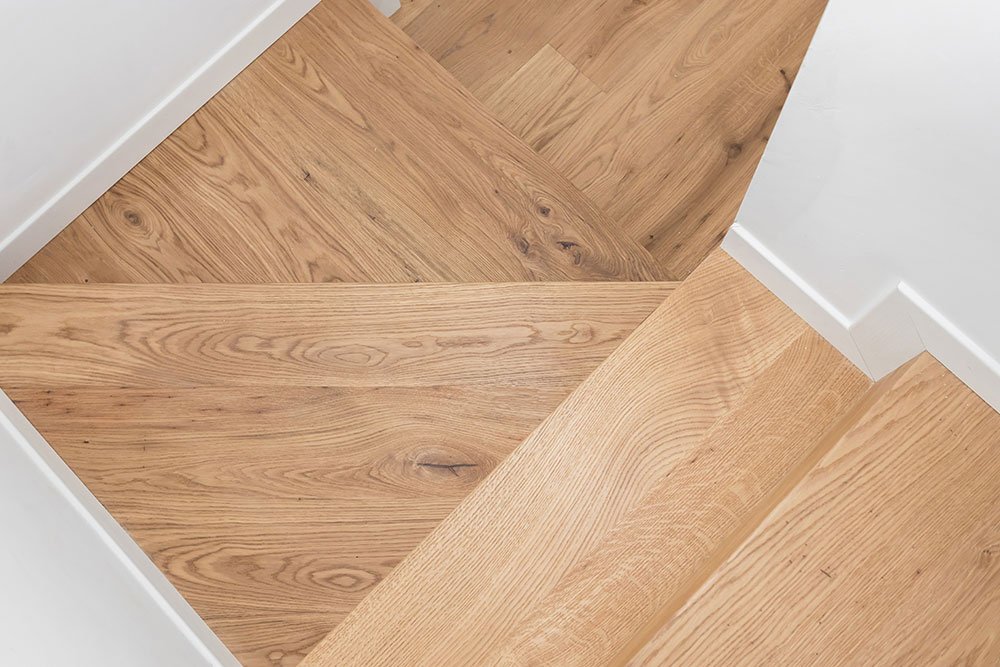
You pick a stain, you love the sample, the main floor glows, then the staircase reads half a tone different. The treads feel darker than the hall, risers drift cooler, the handrail looks warmer at the turn. Nothing is “wrong.” The wood is telling the truth of its grain and geometry.
Floors are mostly flat-sawn fields. Stairs are an orchestra of vertical grain, end grain, profiles, and light angles. Matching them is not a single colour choice — it is a method.
At Royal Hardwood Floors, we have tuned stair-to-floor matches in Ottawa homes since 1922. The work is part chemistry, part optics, and all discipline. Here is the plan that gets you from “close” to seamless.
Who this is for
Ottawa homeowners planning to refinish hardwood floors, update stair treads and handrails, or tie new stairs into existing hardwood.
What you will learn
- Why stairs often look a different colour than the main floor even with the same stain
- How wood species, grain, light, and profiles affect colour
- The method we use to sample, test, and fine-tune stain so floors and stairs read as one composition
Outcome: You walk into your Ottawa home and see a staircase that feels native to the floor, not “added on,” with a colour relationship that looks intentional in every season and every light.
Key Facts for Ottawa Homes
- Company: Royal Hardwood Floors
- Who we are: Ottawa’s only third-generation hardwood specialist, in continuous service since 1922
- Services related to this article: Hardwood floor refinishing, stair refinishing, stain matching, stair capping, handrail and newel refinishing, colour consultations
- Service area: City of Ottawa and surrounding communities, including new builds, renovations, and heritage homes
I. Why Stairs Shift Tone Even with the Same Stain
Grain orientation changes everything
Floors are typically flat-sawn. The board face shows broad cathedrals. Treads often show flatter grain too, but noses and edges catch light differently. Handrails, balusters, and newels often expose vertical grain and end grain that drink stain deeper and reflect light tighter. Vertical grain reads a touch darker and more neutral. End grain reads darker and warmer.
Homeowner tip: If you see the rail and the floor looking slightly different in the store sample, expect that effect to grow once it’s on a full staircase in your home.
Profiles concentrate colour
A tread nose and the underside corner where tread meets riser are small coves. Stain pools in corners and curves, so those zones look one step deeper unless wiped with surgeon-level precision.
Light is never equal in real homes
Floors read under overhead and window light. Stairs live in raking light from side walls or windows on landings. Raking light amplifies even tiny differences in absorption, sheen, and scratch pattern. Ottawa homes with side-lit stairwells often see this most strongly.
Species and parts
Many homes mix species:
- Red oak floors with maple rails
- White oak treads and poplar risers
- Maple and poplar stringers with oak floors
Maple and poplar are tighter-grained and resist pigment. Oak is more open and welcomes it. Same formula, different read.
Takeaway: Tone shifts are predictable. If you plan for them, you can make the whole stair composition sing in key with the floor instead of fighting for impossible sameness.
II. The Match Method: Sample the Stack, Not Just the Stain
A colour card lies by omission. You must approve the whole finishing “stack,” not just the stain name.
- Choose representative pieces One floor board, one tread offcut, one riser scrap, and one rail scrap from your actual site.
- Sand them the way we will sand the real parts Same grit sequence, same water-pop decision, same scratch orientation. Scratch pattern changes colour, especially on treads and handrails.
- Apply the complete system Stain, sealer, and the exact topcoat in the chosen sheen. Tone lives not only in stain — sealers warm or cool, and sheen changes reflection.
- Evaluate in place, in your Ottawa home Look in morning and evening light. Place one sample on the floor near the stair landing, one held on a tread, one on the rail at eye level. If you love it everywhere, you have a match recipe.
When to call a pro:
If your contractor only shows you a tiny stain chip on one species of wood, ask for full-stack samples on the actual floor, tread, and rail pieces before work begins.
III. Tools We Use to Close the Gap
Water-pop discipline
Water-popping opens grain so stain enters evenly. If we pop the floor, we pop the stair parts too — or we pop none. Popping just one amplifies mismatch.
Dual-stage colour
We land most of the colour with stain, then fine-tune with a transparent toner in the first coat of finish. Toners make small, controlled shifts across different parts without muddying grain.
Part-specific wipe technique
- On treads, we wipe stain away from the nose and back corner to prevent colour pooling.
- On rails, we wipe along the length, then feather around the underside where drips like to hide.
End-grain checks
Newel caps and cut rail ends get a pre-seal wash coat before stain so they do not go two shades too deep.
Sheen alignment
Satin on floors and satin on stairs — from the same product line. Mixing brands or sheens looks like a colour change even when pigment matches.
Homeowner tip:
If you hear “we’ll just use whatever finish we have for the stairs,” press for a single system and sheen across all parts.
IV. Common Match Scenarios in Ottawa Homes and How We Solve Them
White oak floor, maple handrail
We target hue with the floor stain. On the maple rail, we add a whisper of amber or brown in the toner to offset maple’s cooler read. We pre-seal rail end grain and keep sheen satin to soften tight maple reflection.
Red oak floor, white oak treads
Red’s warmth can flash through thin stain. We aim the white oak treads slightly cooler, then bring the floor and treads together with a neutral toner. The goal is harmony, not identical pores.
Site-finished floor, prefinished treads
Prefinished tones often carry factory clarity and UV-cure optics. We either site-finish custom caps to match the floor or plan a full room screen-and-recoat in a sheen that meets the tread optics.
Dark, near-espresso palette
Deep colours amplify every difference. We widen our sample set, lengthen stain dwell for uniform penetration, and insist on multi-disc blending of treads so small undulations do not catch light differently than the floor.
V. Stair Components: Tone Rules by Part
Treads
The hero surface. We water-pop consistently, wipe edges dry, and avoid stain stripping at the nose. We target the tread tone to the room’s “average eye read,” not a single board beside it.
Risers
If painted, stain matching is easier — we focus on sharp paint lines. If stained, risers are largely vertical grain. We expect a half-step deeper read and balance with toner in the sealer.
Handrails
High touch and high reflection. Maples need more colour work. Oaks are more forgiving. We keep rails within one tonal step of treads so hands and eyes register unity.
Balusters and newels
Small parts catch light aggressively. We avoid heavy pigment that muddies detail. If the design calls for dark rails and lighter treads, we keep the difference intentional: two steps apart, not one accidental half-shade.
VI. Preparation: Where Matches Are Won
- Scratch alignment: Floors finish with with-grain scratch. Cross-scratch on a tread absorbs stain darker. We hard-plate or hand-scrape to a uniform canvas.
- Dust control: Dust in corners grabs pigment and looks like shadows. We vacuum, tack, and inspect every tread in raking light before colour.
- Masking and reveal: Crisp, repeatable tape lines on skirts and stringers create a 1–2 mm reveal that reads like a tailored shadow, not a smudge.
VII. Sheen, Light, and Time
Sheen choice
Satin is the friend of matches. It softens small differences in pore print and reflection. Semi-gloss sharpens everything and will announce tiny differences you otherwise would not see.
Lighting honesty
Approve colour under the fixtures you will actually live with. LED temperature and CRI alter how brown, grey, and red undertones speak. We test under your bulbs, not just shop lights.
UV and aging
All wood shifts with sunlight. Whites and greys warm slightly. Mid-browns mellow. We choose systems that age together and schedule a maintenance screen-and-recoat cadence that keeps sheen aligned through Ottawa’s seasons.
VIII. Homeowner Decision Guide: Three Quick Choices
- Sameness or harmony: Decide whether you want exact sameness or designed harmony. Exact sameness is rare when species mix. Harmony is attainable and often prettier.
- Painted or stained risers: Painted risers simplify stain matching. Stained risers keep the whole stair in wood tone but need more sampling.
- Sheen personality: Satin gives calm simplicity; semi-gloss feels formal but demands tighter matching and more frequent dusting.
IX. Pitfalls for Ottawa Homeowners to Avoid
- Chasing stains with heavy pigment that buries grain.
- Skipping end-grain control on newels and rail cuts.
- Changing brands between floor and stair topcoats.
- Approving samples on a workbench instead of in-place under real light.
Royal Hardwood Floors is Ottawa’s only third-generation hardwood specialist.
For more than a century, we have matched stairs to floors in private residences, embassies, and heritage properties across the city — tuning colour across mixed species and complex profiles so the whole composition reads as one.
FAQs
Why don’t stairs match the floor even when the same stain is used?
Stairs include vertical grain, end grain, curves, and profiles that absorb stain differently than flat-sawn floorboards. Light hits these parts from different angles, making colour shifts inevitable unless corrected with technique and toners.
Is it possible to get floors and stairs to look the same?
You can achieve harmony and near-seamless tone, but exact sameness is rare when species or grain differ. The key is sampling the full finishing system on real pieces (floorboard, tread, riser, rail) and adjusting by part.
Why do my handrails look cooler or darker than the floor?
Handrails often use maple or poplar, which absorb pigment differently. Vertical grain reflects tighter and darker, while end grain can drink stain deeply. Controlled pre-sealing and fine-toned coatings bring rails back into alignment.
How do pros actually match floors to stairs?
We build full-stack samples from your actual materials, fine-tune with toners, align scratch patterns, control end grain, and use one sheen system across all parts. Then we test everything under your real lighting before finishing.
Should I choose satin or semi-gloss for better matching?
Satin is the most forgiving and unifies colour across different grain orientations. Semi-gloss amplifies even tiny differences in tone and reflection, making matching harder in Ottawa stairwells with strong side light.
Can you match prefinished treads to a site-finished floor?
Yes. We either custom-finish stair caps to match the floor or screen-and-recoat the floor in a sheen that bridges the optics between the two systems.
Do stairs and floors change colour differently over time?
All wood warms slightly with UV exposure, but different species age at different rates. Using a unified finishing system and scheduled maintenance (screen-and-recoat) keeps sheen and tone aligned through Ottawa’s seasons.
Why Our Matches Hold
We measure, sample the full stack, and correct by part with toners and technique — not brute pigment. We align sheen, control light, and respect grain orientation so vertical parts do not drift while flat fields glow. The result is a staircase that feels native to the floor, not attached to it.
Book a Match Session for Your Ottawa Home
Planning to refinish stairs beside a freshly stained floor in your Ottawa house or condo? Book a match session with our team.
We will:
- Build part-specific samples from your actual wood
- Test them under your real lighting
- Tune stain and toner by component
- Deliver a written finish schedule so floors and stairs stay in perfect conversation for years
One visit, clear recipes, and a match that looks inevitable every time you walk up the stairs.