
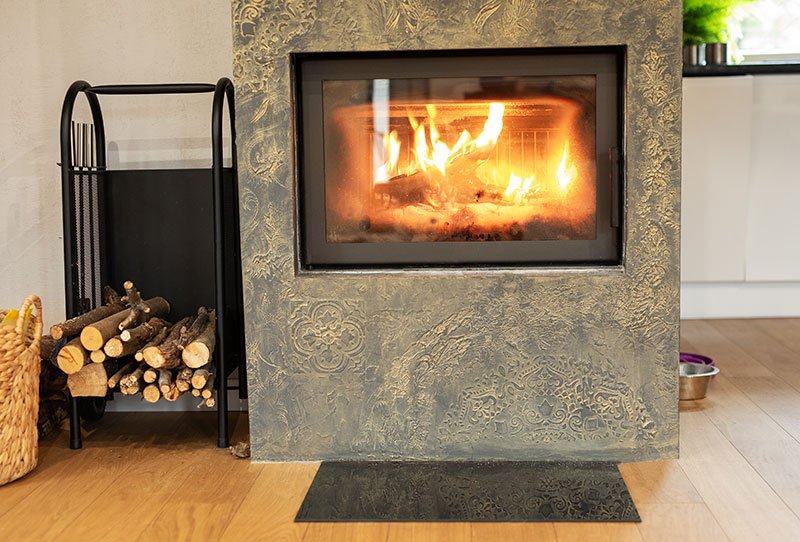
A wood stove is winter’s heartbeat in Ottawa.
It glows, it crackles, and it draws a family close while the wind sharpens outside. It also concentrates heat, drops the occasional ember, and invites heavy tools and ash buckets into the very spot where floors are most exposed. Protection is not one mat or one rule. It is a system built for Ottawa’s realities: deep cold, salt-laden boots, and long burn cycles. Design for clearances, control radiant and conductive heat, capture embers, and build a clean, code-compliant transition from hearth to hardwood. Done properly, your floor keeps its rich, timeless glow while the fire does what it is meant to do.
I. The three threats in a real Ottawa winter
Radiant and conductive heat. Stoves radiate heat into the room and conduct heat into any surface they touch. Prolonged warmth can dry and darken boards, soften film finish, or print the outline of an undersized hearth into the floor.
Embers and sparks. Even careful loading sheds a few embers. A live fleck on winter-dry wood can burn a pinpoint crater that no cleaner will erase.
Grit, ash, and moisture. Ash buckets, log carriers, and salt from entries turn to an abrasive paste. That paste scratches finishes and etches urethane if it dries on the film.
Plan for all three, not just one.
II. Start with the listing manual and your local authority
Every listed stove publishes required clearances to combustibles and a floor protection rating beneath and in front of the unit. Local regulations adopt those requirements and can add specifics for hearth size and edges. Treat the manual as your anchor. Where the manufacturer specifies a thermal performance value for the hearth system, meet or exceed it with documented materials and keep the paperwork with your home records.
If a stove is older or unlisted, engage a qualified installer to determine clearances and floor protection using recognized standards. Do not guess. Heat does not negotiate, and neither does insurance after a loss.
III. Floor protection: ember protection versus thermal protection
Not all hearth pads are created equal. Match the protection to the stove’s needs.
Ember protection. Many modern, listed units with insulated fireboxes and bottom heat shields require a noncombustible surface that prevents embers from contacting wood. Steel, stone, porcelain tile, or manufactured hearth pads rated for ember protection all qualify. Keep joints tight so sparks cannot reach wood through gaps.
Thermal protection with R-value. Some stoves, especially older or uninsulated boxes, call for a hearth with a specific thermal resistance. That means layered materials with a calculated R-value. Typical stacks include a cementitious board base, an air space, and a stone or tile finish. Build to the published requirement or higher.
Under-stove footprint and the landing zone. The hearth must fully support the stove, including legs or pedestals, and extend forward of the loading door to catch rolling embers, with side extensions where required. Build to the manual’s minimums, then add a margin if the room allows. Nobody regrets an extra inch of safety.
IV. The hearth-to-hardwood transition that will not fail
The edge where masonry meets wood is where beauty and durability are tested.
Solid, flush, and isolated. A flush transition eliminates toe stubs and prevents chair legs from chipping tile edges. Where flush is impossible, use a low-profile, noncombustible reducer with a smooth rise. Keep combustible trim out of the heat wash.
Movement joint. Wood moves with season and humidity. Stone and tile barely move. Leave a thin, concealed movement gap between hardwood and hearth, filled with a high-temperature, color-matched flexible sealant or hidden under a metal edge profile. Do not caulk wood tight to masonry.
No soft vinyl or rubber at the edge. Heat can deform resilient trims and print their outline into finish. Choose metal or stone details that stay stable.
V. Heat discipline for hardwood and finish
Surface temperature. Hardwood and its finish live long when they avoid chronic high temperatures. As a practical rule, the floor in front of the stove should never feel uncomfortably hot to the hand during an extended burn. If it does, the hearth is too short or the heat wash is excessive.
Finish selection. High quality two-component waterborne urethanes and premium oil-modified polys tolerate normal hearth-zone warmth but can amber or haze if cooked repeatedly. Where hearths run close, satin and matte sheens hide the micro scuffs of gritty seasons better than semi gloss.
Textiles. Avoid dense rubber-backed mats that trap heat. If you prefer a textile landing, choose a pure wool hearth rug on a thin felt pad. Lift it after burns so the floor can breathe.
VI. Ember control in daily use
Door discipline. Open the door slowly to equalize pressure and reduce spark spit. Load with a shallow shovel rather than dropping rounds.
Ash management. Use a metal ash bucket with a tight lid and keep it on the hearth, never on wood. Embers can remain live for hours.
Spark screens and air wash. If you run with doors open for effect, use the approved spark screen. Keep the glass and air wash clean so you are not tempted to open during an active burn.
Tool storage. Rest pokers and tongs on a stand with a noncombustible base. Hot tips on wood are silent finish killers.
VII. Winter traffic, salt, and housekeeping
Ottawa streets mean salt and grit all season. Keep it away from the stove room.
Three-stage entry. Exterior scraper mat, interior absorbent mat, and a hallway runner that leads traffic away from wood. Vacuum daily with a hard-floor head.
Boot management. Keep a boot tray near the stove room entry. Salt and meltwater mix with ash to create an abrasive slurry.
Cleaning. Use a pH neutral wood floor cleaner and a barely damp microfiber pad. Never flood mop around a hearth. Moisture can wick under stone and swell the edge of the boards.
Humidity. Expect seasonal board gaps during deep cold. Maintain indoor humidity within a healthy range to reduce movement in heritage homes and condos with radiant heat.
VIII. Retrofitting a hearth on existing hardwood
Upgrades can be safe and beautiful.
Recessed platform. Define the footprint with painter’s tape and cut hardwood cleanly along board seams to receive a noncombustible platform. Build the stack to the required protection level using rated boards, proper fasteners, and mortar. Photograph each layer and keep the documentation.
Edge detailing. Use a discreet metal profile or a stone return. Maintain the movement gap. Blend the adjacent field by screening and recoating so the new edge disappears into the room.
Manufactured pads. Where cutting is not desirable, use a documented hearth pad with ember and thermal ratings. Size it generously and set it dead flat so it does not rock.
IX. Inspections, insurance, and common pitfalls
Permits and inspections. Many jurisdictions require permits for new or relocated stoves and chimney work. Passing inspection protects safety and preserves insurance coverage.
Five common mistakes.
- Hearth sized for looks rather than rolling ember capture.
- Combustible quarter round creeping into the heat zone.
- Vinyl or rubber reducers that soften and print into the finish.
- Unlisted stove with guessed clearances.
- Ash bucket parked on hardwood, leaving a constellation of burn specks.
X. Proofpoint
Royal Hardwood Floors has protected and restored hearth-zone hardwood in Ottawa homes since 1922. We are the region’s only third-generation hardwood specialist. From heritage brick stoves in the Glebe to modern high efficiency units in new builds, our field-tested hearth transitions and finish choices deliver the comfort of a real fire without the scars most living rooms show by February.
XI. Quick homeowner checklist
- Read your stove’s listing manual. Note floor protection and clearance requirements.
- Decide on ember-only or thermal-rated hearth protection based on the manual.
- Choose a flush, noncombustible hearth with a proper movement joint to hardwood.
- Keep ash in a lidded metal bucket that lives on the hearth, not on the floor.
- Use wool or felt-only hearth rugs. Avoid rubber-backed mats.
- Install entry matting to intercept salt and grit. Clean with a pH neutral wood floor cleaner.
- Photograph the hearth build layers and save receipts for insurance and resale.
A fire should warm the room, not mark it. With a properly built hearth, a smart transition, and daily habits that respect heat and embers, your floors will read calm and elegant all winter.
FAQs
Do I need thermal protection or just ember protection under my stove?
Check the stove manual. Modern insulated units often need ember protection only. Older or uninsulated models usually require a tested hearth assembly with a specific R-value.
What rug is safe in front of a wood stove on hardwood?
Use a pure wool hearth rug on a thin felt pad. Avoid rubber or PVC backings that trap heat and imprint finish.
Our living room is heritage maple. Can I make the hearth flush without harming original boards?
Yes. A recessed, noncombustible platform with a clean metal edge and a concealed movement joint preserves the area while meeting protection requirements.
Salt keeps reaching the stove room. Any simple fix?
Adopt a three-stage entry and a boot tray. Vacuum with a hard-floor head daily in winter to stop grit before it abrades the finish.
The floor in front of the stove feels very warm during long burns. Is that normal?
Consistent high surface temperature signals a short hearth or excessive heat wash. Extend protection or add shielding before the finish fatigues.
Book a free quotation
Ready to protect the beauty of your floors without sacrificing the fire heat you love. Book a free quotation. We will review your stove model, clearances, and room layout, then propose hearth builds, edge profiles, and protective accessories that safeguard your hardwood through Ottawa’s longest winter nights.
Serving Ottawa since 1922 as the only third-generation hardwood specialist in the region.