
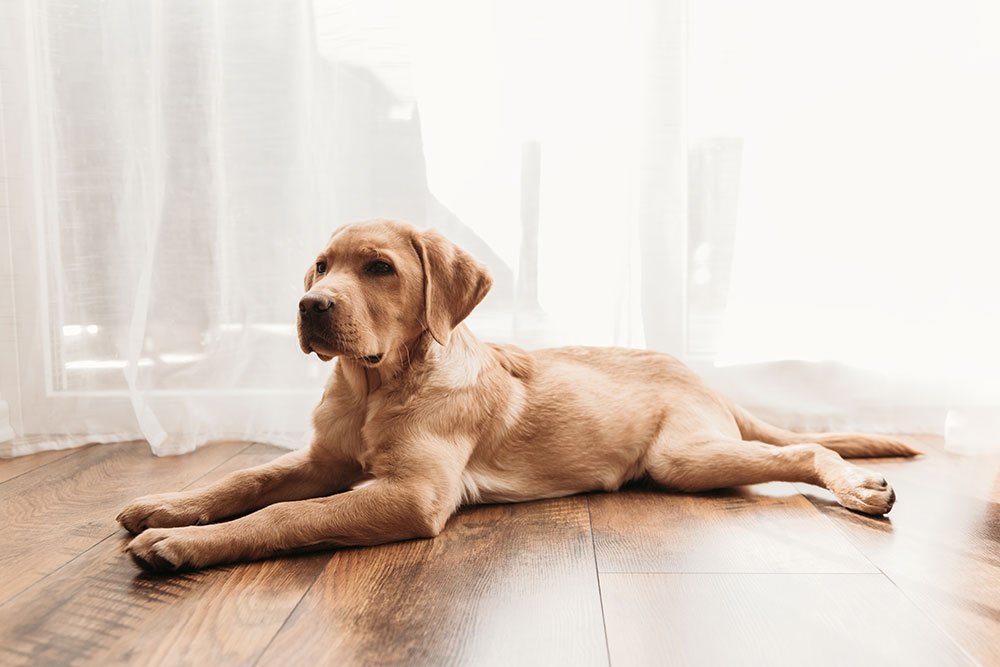
Love the dog. Save the floor.
Dogs make a home feel alive. They also bring winter inside on four paws. The fix is not nagging. It is a short, repeatable rhythm that trims claws, captures meltwater, hides hair, and heals small marks before they spread. Use this plan to keep wood protected and the household calm.
I. Nail trim cadence and the quick file trick
Claw tips are the number one source of micro-scratches in winter. Cold walks harden nails and make them click louder on wood.
- Cadence. Aim for a trim every 2 to 3 weeks for most breeds. Large or active dogs often need closer to every 2 weeks in January and February.
- Quick file trick. Keep a fine-grit pet nail file by the leash. After evening walks, give each front paw five gentle strokes. That 30-second ritual softens the sharp micro-edge that leaves hairline trails on satin finishes.
- Check the splay. If you hear slipping on turns, nails are long or pads are dry. Trim and add a vet-approved pad balm.
II. Towel station at the door that kids can manage
Make the good habit the easy habit.
- Hardware. A boot tray with a 1.5 cm lip, a shallow basket of clean hand towels, and a hook for a microfiber mitt.
- Flow. Dog sits on the mat. Kids wrap one paw at a time, squeeze between toes, then pat dry. Mitt catches lingering salt dust.
- Rotation. Keep a second basket for damp towels so nothing wet returns to the floor. Wash on hot, no fabric softener.
- Condo tip. If your building has a pet wash, still dry paws at your door. The walk from the elevator adds fresh meltwater.
III. Lighter stain and satin sheen that hide hair better
Colour and sheen are quiet allies in pet homes.
- Lighter stain masks shed hair and the faint trails from daily play better than espresso tones.
- Satin sheen diffuses light, so salt specks, paw prints, and micro-scratches are less visible than on semi-gloss.
- Heritage balance. In older homes, a mid-tone satin keeps character while softening the look of traffic.
- Proofpoint
Royal Hardwood Floors is Ottawa’s only third-generation hardwood specialist serving the region since 1922. That heritage shows in stain matching and pet-smart finish choices.
IV. Touch-up for claw marks in traffic lanes
You do not need to refinish for every small mark.
- Assess. If scratches disappear when wiped with a damp cloth and reappear when dry, they are in the finish only.
- Blend. Use a wood-tone blending pencil on the line, then buff with a microfiber cloth.
- Fill micro-nicks. Press a colour-matched putty into tiny dings at board edges, level with a plastic card, and buff.
- Reset gloss. Finish-only scuffs across a wide lane might qualify for a fast screen and recoat later, which refreshes protection without sanding to bare wood.
V. When runners help and when they trap grit
Runners are great if they are chosen and maintained well.
- Help. Washable woven runners in entry lanes absorb meltwater and capture grit before it reaches seams. Longer is better.
- Harm. Rubber or PVC backings can react with finishes, leaving dull rectangles that look like stains. Use fabric-backed or PVC-free pads labeled safe for finished wood.
- Pet zones. Place a clear polycarbonate mat under water bowls and lift it nightly to dry. Swap in a silicone tray for enthusiastic drinkers.
- Cleaning cadence. Wash runners weekly in storm season, fully dry, then rotate. Damp textiles redeposit salt dust.
VI. Quick clean strategy after snowy play
This is your 6-minute loop that prevents scratches.
- Dry capture. Wide microfiber dust mop around the door lane and favorite play turn.
- Spot neutralize. Mist a pH-neutral hardwood cleaner on a cloth for paw prints or splash rings, then dry with a second cloth.
- Nearly dry pass. Lightly damp microfiber along traffic lines, followed by a dry pad.
- Edges. A fast sweep along baseboards where salt hides.
VII. Repair options for one bad plank near the door
Doorways take the worst beating. If one board looks tired, fix just that board.
- Board replacement. A pro can surgically remove and replace one plank, then blend stain and finish so seams read clean.
- Threshold strategy. If damage hugs the threshold, a discrete repair and recoat may be faster than a room-wide sand.
- Heritage caution. In older homes with thick plank subfloors, matching species and grain is key. A careful patch respects original fabric and keeps the story intact.
- Condo note. Check strata rules about work hours and elevators. Good planning shortens disruption.
VIII. The family rhythm that actually works
You do not need perfection. You need a rhythm everyone can keep.
- Trim nails every 2 to 3 weeks.
- Run the towel station on every return.
- Choose satin for the kitchen and entry lanes.
- Use runners that wash and dry quickly.
- Touch up small marks monthly and document bigger ones with a photo for later.
- If finish looks dull in lanes but wood is intact, plan a mid-winter screen and recoat to reset protection.
Quick checklists
Door routine
□ Boot tray with lip
□ Basket of clean towels
□ Microfiber mitt on hook
□ Dry bin for used towels
Pet-smart surfaces
□ Satin sheen in traffic lanes
□ Lighter stain in pet-heavy rooms
□ Fabric-backed runners and safe pads
Touch-up kit
□ Colour-match putty
□ Blending pencil
□ Microfiber block
□ Clear bowl mat or silicone tray
Repair trigger
□ One bad plank by door
□ Dull finish lane, no bare wood
□ Runner backing marks
FAQs
How often should I trim my dog’s nails in winter?
Every 2 to 3 weeks, plus a quick file after walks to soften sharp tips.
Do lighter floors really hide pet hair better?
Yes. Lighter or mid-tone stains show less contrast with typical shed, which reduces visible buildup.
Are rubber-backed mats safe on hardwood?
Many leave dull prints. Use fabric-backed runners or PVC-free pads labeled safe for finished wood.
Can I fix small claw marks myself?
Yes for finish-only marks. Use a blending pencil and microfiber buff. If scratches go into bare wood, call a pro.
What sheen hides paw prints best?
Satin. It diffuses light and mutes salt specks, hair, and micro-scratches.
Book A Free Quote!
We can replace just the chewed stair corner or the one tired plank by your door. Send a few phone photos and we will tell you within 24 hours what will help most.
Serving Ottawa since 1922 as the only third-generation hardwood specialist in the region.