
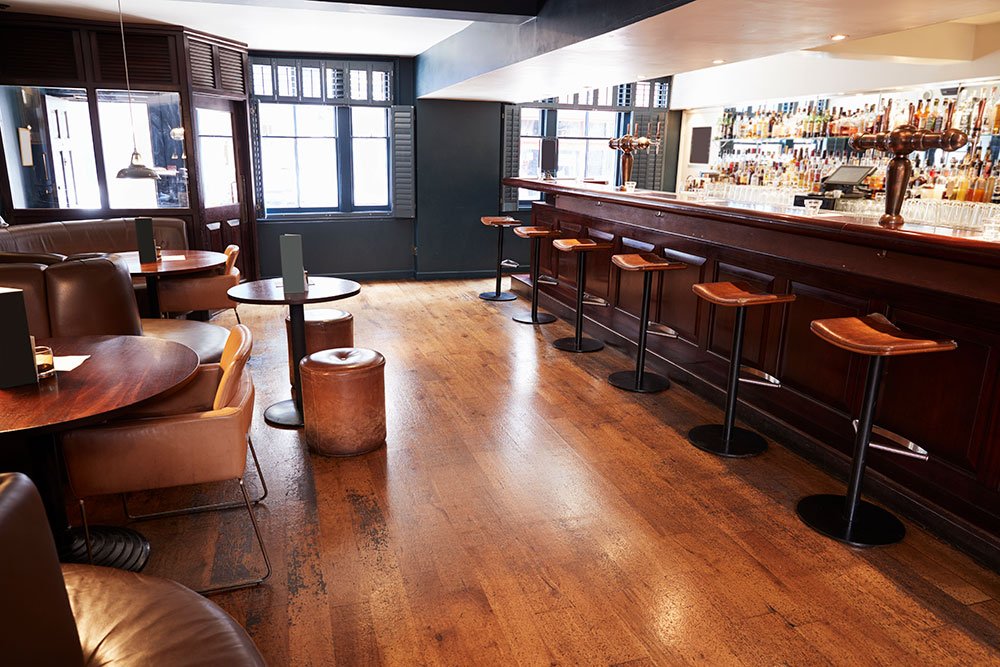
Close at 11, shine by breakfast.
You do not need a full refinish to restore clarity and traction in winter. If wear is living in the finish, a professional screen and coat is the fastest way to reset protection, lift the look, and keep revenue flowing. Done right, you lock in a safer surface, brighter wood tone, and easier daily cleaning without blocking the dining room for days.
I. What qualifies for screen and coat vs full sanding in commercial spaces
Use two quick checks.
- Wet-wipe test. Lightly dampen a microfiber cloth and wipe a dull lane. If colour and sheen pop while damp, wear is mostly in the top film. That is a screen and coat candidate. Our recoat procedure is simple: clean, light abrasion to key adhesion, then two coats of finish that reset protection and sheen.
- Grey test. If areas stay grey or dark when damp, moisture reached the wood. That is a full sand to fresh wood, then stain and finish. Refinishing extends life, protects from water, dirt, and scratches, and can cost less than replacing floors.
II. Product choices with low odor and fast cure for food service
Hospitality lives on air quality and quick turnarounds.
- Water-based polyurethane provides a clear look with very low odor. It dries within roughly two hours between coats so multiple coats can be applied in one night under pro supervision. That is why it is our default for occupied spaces.
- Oil-based can be appropriate for specific looks, yet it cures slower and smells stronger, which complicates overnight windows.
Proofpoint
Royal Hardwood Floors has served Ottawa since 1922 across residential, commercial, and governmental buildings, including restaurants and stores. Restoration-first processes and 1-Day style options are our hallmark.
III. Scheduling by zones: bar, main dining, corridors, back-of-house offices
Open by breakfast or lunch by sequencing work.
- Bar lane. Tape a one-metre zone from the bar face. Clean, screen, and coat first so it tacks while the crew moves downrange.
- Main dining. Work in halves or thirds. Coat the far section first, then the near section last to reduce crossovers.
- Washroom corridors and thresholds. Prioritize these high-risk slip areas early in the night to maximize dry time.
- Back-of-house offices. Coat last. These areas can tolerate limited access delays next morning.
- Elevators and lobbies in hotels. Stage temporary walk-off tiles and clear routing so guests never step on wet finish.
IV. Furniture stack plans, table glide kits, and moving crews
The fastest nights start with disciplined prep.
- Stack map. Pre-assign stacks of four chairs and label bays. Roll tables to a staging zone on felted sliders.
- Glide kits. Replace or install non-marking felt glides before reset. Dirty or hardened glides act like sandpaper on new film.
- Back-of-house staging. Store stacks in a protected corridor. Use dollies with clean wheels only.
- Crew choreography. One lead for prep containment, one for clean and screen, one for coating, one for glide and reset. This keeps movement predictable and dust out of the finish.
V. Cost, cure times, and safe reopen checklists
What managers need to know for morning sign-off.
- Scope and cost. Screen and coat is cleaner, faster, and more affordable than sanding to wood. It stretches finish life and defers big refinish budgets.
- Cure windows. With water-based systems, multiple coats happen in a night. Morning socks-only walkthrough for management is typical, furniture returns light and careful, and rugs wait several days so the film builds early hardness under fabric.
- Morning reopen checklist
- Walk paths are dry to touch and signed off.
- Chairs reset with new felt glides.
- Mats and runners are clean and fully dry.
- Housekeeping stocked with pH-neutral cleaner and microfiber.
- Staff briefed on “no tape on floor” and “no silicone quick-shine” rules.
VI. Housekeeping cadence after the recoat
Protect the new film from salt and residue.
- Open and close. Dry dust mop entries, bar arcs, washroom corridors, queue turns.
- Storm hours. Spot neutralize every 60 to 90 minutes with pH-neutral cleaner on a microfiber cloth, then dry.
- Damp-then-dry pass. Two to five times weekly, wrung nearly dry, followed by a dry pad. Liquids and seams are not friends.
- Never list. No vinegar, ammonia, oil soap, or silicone restorers. They haze or reduce traction and make future recoats harder. This aligns with our commercial refinishing guidance and recoat process.
VII. When a mid-season screen and coat saves a spring redo
Winter is abrasive. Salt and dry air accelerate micro-scratches in lanes. If a traffic lane looks dull but brightens when damp, it is asking for a maintenance recoat. A planned mid-season recoat restores clarity and traction quickly with low odor and short dries, and it is standard service for Ottawa restaurants and stores.
VIII. A realistic overnight timeline
- 11:00 p.m. Close. Stack, roll, protect, and post signs.
- 11:30 p.m. Deep clean. Vacuum edges and thresholds.
- 12:15 a.m. Screen. Light abrasion for adhesion.
- 1:30 a.m. First coat down. Vent gently as directed.
- 3:30 a.m. Second coat where specified.
- 6:00 a.m. Socks-only walkthrough for management.
- 7:00 a.m. Light furniture reset with fresh glides.
- Service. Lunch service ready. Hold area rugs for several days.
Quick checklist
Pre-night prep
□ Zone map printed and taped
□ Staging bay cleared
□ Glide kits ready by section
□ Neutral cleaner and microfiber stocked
Crew flow
□ Containment lead
□ Clean and screen lead
□ Coatings lead
□ Reset lead
Morning reopen
□ Dry-touch sign-off completed
□ Chairs reset with new glides
□ Rugs off the floor for several days
□ Staff briefed on neutral-cleaner SOP
FAQs
What is a screen and coat in one line?
A clean and light abrasion of the existing finish followed by new coats that restore protection and sheen without sanding to bare wood.
Which product keeps odor low for overnight work?
Water-based polyurethane. Clear look, very low odor, short dry windows for multiple coats in a night.
How do I know if I need recoat or refinish?
If a dull lane looks good when damp, recoat. If grey remains, plan a refinish.
Will we need to close for a day?
Not usually with water-based systems. Overnight work and a morning reset are standard in occupied spaces.
Do you handle restaurants and hotels specifically?
Yes. Our portfolio spans restaurants, stores, and high-profile institutions across Ottawa since 1922.
Book A Free Quote!
Send floor photos and a layout. We will map a one-night plan that sequences zones, specifies low-odor coatings, handles furniture logistics, and gets you back to service by lunch.
Serving Ottawa since 1922 as the only third-generation hardwood specialist in the region.