
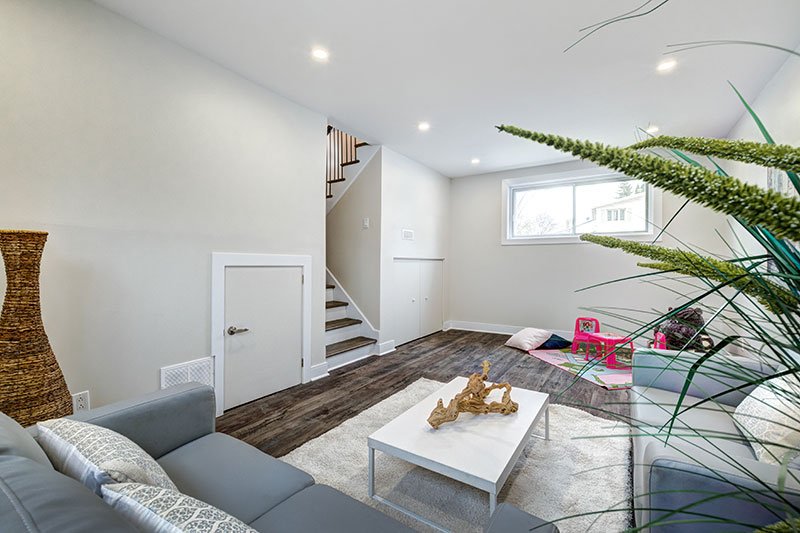
Engineered Choices, Moisture Testing, and Vapor Control for Below Grade Floors
Basements in Ottawa can be beautiful living spaces, but they ask more of wood flooring. Below grade you deal with cool concrete slabs, seasonal moisture, and hidden vapor drive that never troubles upper floors. The key is to design the basement floor as a system. You choose materials that tolerate moisture, verify the slab with proper tests, and control vapor before a single board is laid. Done right, you get a warm, elegant surface that stays quiet and stable through Ottawa’s wet springs, humid summers, and dry winters.
60 second overview for Ottawa homeowners
- Who this is for: Ottawa homeowners planning hardwood or wood look flooring in a basement or split level lower level.
- Main risk: Concrete slabs that hold moisture and push vapor into wood. This leads to cupping, buckling, noise, and odors if not controlled.
- Best path: Engineered hardwood or quality alternates, installed over a tested slab with a clear vapor control plan.
- What you will learn:
- Why solid hardwood struggles below grade in Ottawa
- Which basement flooring options are safer and why
- Moisture tests that tell the truth about your slab
- Vapor control systems that actually work, not just plastic sheets
- Clear “walk away” conditions where wood should wait
Royal Hardwood Floors is Ottawa’s third generation hardwood specialist, in business since 1922. We design Ottawa basement floors to match the slab, the moisture, and the way your family actually lives.
I. Why Solid Hardwood Struggles Below Grade
Solid hardwood is hygroscopic, it absorbs and releases moisture. In basements, the concrete slab works like a reservoir that releases moisture as seasons change. Even when the surface looks dry, vapor can move through the slab and into wood.
When that happens:
- Solid boards swell, cup, crown, and telegraph seams
- Finishes are stressed from below and can lose adhesion
- Persistent vapor under impermeable pads can foster microbial growth and odor
The answer is not to give up on wood forever in basements. The answer is to select materials engineered to manage moisture, and to pair them with a vapor control plan that fits your specific Ottawa slab.
II. Engineered Hardwood, Luxury Vinyl, and Other Safer Paths
Engineered hardwood
- Built with a cross ply core and a real wood wear layer, engineered planks move far less than solid wood.
- Best practice below grade is:
- A floating engineered system over a radiant rated underlayment with documented vapor resistance, or
- A glue down over an approved vapor mitigation primer and elastomeric adhesive.
- Look for:
- Wear layers of 3 to 6 mm for long life and future refinishing
- Products that are explicitly warranted for below grade installations
Luxury vinyl plank or tile (LVP, LVT)
- A strong option for flood prone Ottawa basements that still want a wood look.
- Choose rigid core products with attached underlay only if the slab is flat and tests dry within the manufacturer’s limits.
- Important: vinyl hides moisture, it does not solve it. You still need vapor control or you risk trapped moisture, odor, and mold in walls or furnishings.
Raised subfloor panels
- Interlocking panels with vapor channels create an air break that separates finished flooring from cool concrete.
- They add comfort underfoot and can help in spaces with minor seasonal dampness when paired with dehumidification.
- Use only on documented, crack free slabs with active moisture control.
When clients want true wood under difficult basement conditions, engineered hardwood installed over a tested vapor system is usually the most reliable path in Ottawa.
III. Moisture Tests That Tell the Truth
Guessing is the most expensive part of many failed basement projects. A proper below grade assessment includes at least one of the following, plus ambient readings.
- In situ relative humidity probes, ASTM F2170
Sensors are placed inside drilled holes at a specific depth. After equilibration, they report the slab’s internal RH. Results correlate well with long term performance of adhesives and coatings. We pair readings with slab and room temperatures to interpret real risk. - Calcium chloride moisture vapor emission, ASTM F1869
Measures the rate of moisture leaving the slab surface in pounds per 1000 square feet per 24 hours. Useful as a surface indicator. In situ RH has become the preferred method for most modern adhesive systems. - Pin and pinless moisture meters for surfaces and wood
Helpful for mapping cold spots, old leaks, or curing anomalies. They do not replace F2170 or F1869 but they complete the picture. - Ambient conditions
Record room temperature and RH. Ottawa basements that cannot sustain 35 to 50 percent RH will challenge even the best floor. Plan for a proper dehumidifier that drains to a sump or floor drain, not a bucket that needs constant emptying.
We provide a written report with diagrams, photos, and exact numbers. If the slab exceeds limits, we propose mitigation rather than hoping for a dry spell.
IV. Vapor Control: Options That Work Below Grade
Your vapor plan needs to match your test results and your chosen installation method. There is no single product that fits every Ottawa basement.
A. For floating engineered floors
- Use an underlayment with an integrated vapor retarder that is rated for below grade slabs.
- Confirm the perm rating and the manufacturer’s moisture limits.
- Seal all seams exactly as instructed. Continue the retarder up the wall by about an inch, then trim after baseboard installation to prevent edge wicking.
- Maintain expansion gaps at the perimeter and isolate door thresholds so the floating floor can move freely.
B. For glue down engineered floors
- Where in situ RH is moderate and within adhesive tolerance, use a premium moisture curing silane or urethane adhesive that is approved for your measured RH.
- Where RH is high, install a two part epoxy moisture mitigation system that reduces vapor transmission to the adhesive’s published limits.
- Broadcast clean sand into the epoxy while it is wet if the adhesive requires a mechanical key.
C. Crack and joint control
- Simple hairline cracks are usually cosmetic.
- Active or wide cracks need structural repair before coatings or flooring.
- Control joints should be honored through the flooring with movement breaks or flexible fillers, not bridged with rigid wood.
D. Perimeter strategy
- Keep finished flooring clear of foundation walls. Basements are the last place to bury movement joints in caulk or tight trims.
- A resilient, open perimeter gap helps prevent cupping, buckling, and squeaks.
V. Subfloor and Flatness Preparation
Basement floors succeed or fail on preparation more than product choice.
- Flatness
Many engineered products require 3 to 6 mm variation over 10 feet. Use cementitious self levelers that are compatible with your moisture system. Avoid gypsum levelers on slabs without a clear moisture barrier. - Clean, profiled surface
Remove curing compounds, paint overspray, and old adhesive residue. Shot blast or grind where needed so mitigation primers and adhesives can bond properly. - Thermal comfort
Concrete feels cold even when it is dry. Pair the floor with area rugs after finish cure, and consider radiant heat for premium comfort. Verify radiant controls keep surface temperatures below 27 Celsius to protect finishes and adhesives.
VI. When to Walk Away from Wood in the Basement
Wood is not a cure for water problems. In some Ottawa basements, the right decision is to pause the flooring and fix the structure first. Choose alternate surfaces or stage the project later when any of the following are present:
- Active water entry through cracks, cove joints, or failed sumps
- RH readings far beyond mitigation limits, with no reasonable way to reduce them
- Chronic sewer backups or no reliable drainage strategy
- Radon mitigation still unresolved in the affected zone
In these cases, address structure, health, and safety first. Then return to flooring with a clear plan and lower risk.
VII. Occupant Comfort, Odor, and Scheduling
Basement installations in Ottawa often run in winter with windows shut and families living upstairs. Plan for comfort as well as performance.
- Low odor systems
Use two component waterborne finishes for site finished engineered floors, or factory finished products where odor must be minimal. - Air management
Run HEPA air scrubbers with carbon stages during adhesive work and finishing. Cover HVAC returns in the work zone, then have them cleaned or at least vacuumed before turnover. - Cure windows and furniture
Respect furniture and rug timelines for new finishes. Young films can imprint under dense pads or heavy furniture. Plan for felt plus natural rubber pads only after the finish has reached full cure for your product.
VIII. Expectations and Maintenance for Ottawa Basements
A safe basement floor is a partnership between the slab, the system, and the homeowner.
- Maintain 35 to 50 percent RH year round with a dedicated dehumidifier in summer.
- Use neutral hardwood cleaners, no steam mops, and breathable entry mats.
- Inspect seasonally for plumbing leaks or foundation issues and correct them immediately.
- After major rain events, lift area rugs until the dehumidifier brings the space back into range.
With these habits, engineered wood basements stay calm and elegant for many years in Ottawa’s climate.
IX. One Proven Proofpoint
Royal Hardwood Floors has delivered below grade solutions in Ottawa since 1922. From heritage homes in Old Ottawa South to new infill builds in Hintonburg and suburban basements in Kanata and Orleans, we pair precise moisture testing with engineered systems that respect the realities of concrete and local climate.
That century of practice is why we specify engineered or resilient alternates below grade, and why our basement floors stay quiet, stable, and comfortable.
X. Ottawa Homeowner Checklist for Basement Wood Floors
- Note any past leaks, damp corners, or musty smells and fix sources before any flooring work.
- Schedule in situ RH or calcium chloride tests and record ambient RH and temperature.
- Choose engineered hardwood rated for below grade or a resilient alternate if flood risk is present.
- Select a vapor control plan that matches your test numbers, floating or glue down.
- Confirm slab flatness and plan the self leveling step where needed.
- Budget for a dedicated, drained dehumidifier, not a portable unit with a bucket.
- Use breathable pads and follow finish cure times once your new floor is installed.
Basements reward careful planning. Measure first, control vapor, and choose engineered systems that welcome the space rather than fight it. The result is warmth underfoot, grain that reads true, and a floor that tells its story without swelling, cupping, or complaint.
FAQs
Can I install solid hardwood in my Ottawa basement?
Not safely. Solid hardwood absorbs below-grade moisture and is prone to cupping, crowning, and finish failure. Engineered hardwood or resilient flooring is recommended for basements in Ottawa.
Do I really need moisture testing before installing basement flooring?
Yes. Proper tests such as ASTM F2170 in-situ RH probes or calcium chloride tests reveal vapor levels that are not visible on the surface. Skipping testing is one of the most common causes of basement floor failure.
What is the safest type of hardwood for a basement?
Engineered hardwood rated for below-grade installation. It uses stable cross-ply cores that resist movement and performs far better than solid wood when paired with the correct vapor control system.
Do I need a vapor barrier under basement flooring?
Yes. Below-grade slabs require either a 6-mil polyethylene retarder under floating floors or a full moisture-mitigation system under glue-down installations. The vapor plan must match your test results.
Can luxury vinyl plank (LVP) replace engineered hardwood in basements?
LVP is a strong alternative for flood-prone basements, but it does not solve moisture problems. A vapor plan is still required to avoid trapped moisture and odor beneath the floor.
What basement moisture readings are too high for wood?
If in-situ RH exceeds the manufacturer’s limits (often around 75–85 percent) without a mitigation system, wood installation should wait. Extremely high readings may require structural fixes first.
Is a raised subfloor helpful in Ottawa basements?
Raised subfloor panels can improve comfort and add an air break above cool concrete, but they must be used only on dry, crack-free slabs with controlled humidity.
How do I control humidity in my basement after flooring is installed?
Maintain 35–50 percent relative humidity year-round using a dedicated dehumidifier that drains to a sump or floor drain. Portable bucket units are rarely sufficient for Ottawa basements.
Why do basement floors sometimes smell musty?
Musty odors often indicate vapor trapped under flooring, damp walls, or elevated slab moisture. Improving vapor control, dehumidification, and drainage usually resolves the issue.
When should I choose something other than wood for my basement?
Avoid wood if there is active water entry, unresolved drainage issues, high RH that cannot be reduced, or radon mitigation still in progress. Fix structure and moisture first, then revisit flooring.
Ready to plan a safe, beautiful basement floor in your Ottawa home?
Schedule a subfloor moisture and vapor assessment with Royal Hardwood Floors. We will map your slab with in situ probes or calcium chloride tests, assess ambient conditions, and issue a basement specific specification that matches materials, vapor control, and comfort to your home
Serving Ottawa since 1922 as the only third-generation hardwood specialist in the region.