
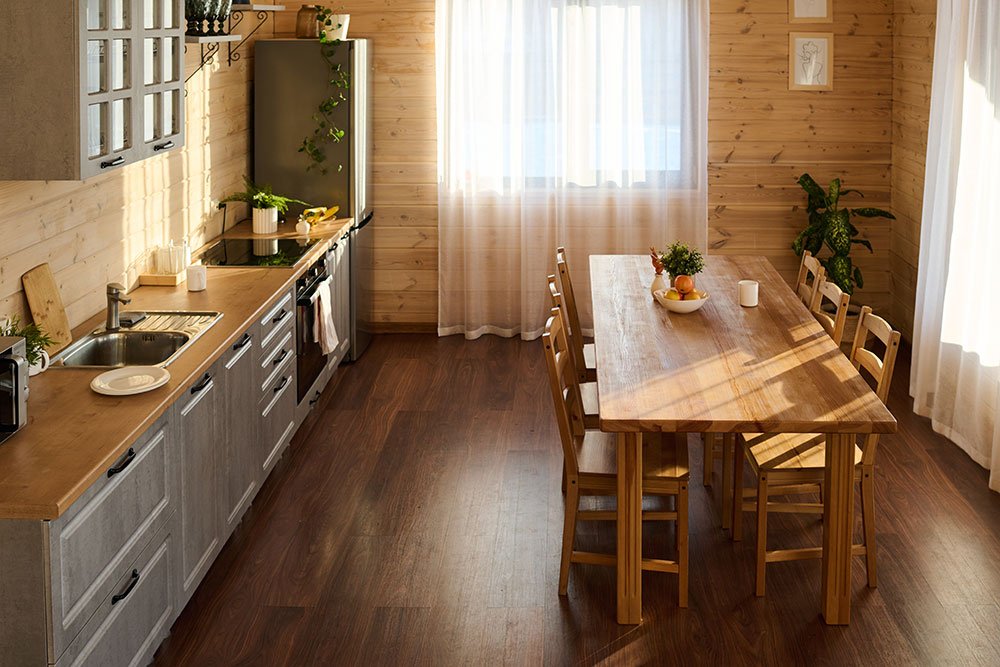
The kitchen is a splash zone. Your floors can still shine.
December turns kitchens into mission control. Soups simmer. Kettles whistle. Cookies cool while kids orbit the island. Water, steam, and grit ride in on boots and chair legs. None of this means your hardwood must suffer. With a few smart setups and habits, you can keep the finish calm, the seams tight, and the surface looking elegant through peak season.
I. Steam from soups and kettles, and why mats near sinks matter
Steam and splashes are predictable around the sink, stove, and kettle. Moisture that sits on the finish can leave a white ring or haze, especially in winter when air is dry and finishes cycle hot to cold.
- Place a washable, non-rubber fabric runner at the sink that absorbs splashes without trapping moisture. Look for a textured woven top and a grippy fabric backing that will not imprint the finish.
- Keep two backups in the laundry rotation so a damp mat never returns to the floor the same day.
- Angle kettle spouts away from upper cabinets and away from finish seams.
- Use a vent hood during soup and pasta sessions. A few minutes of capture after cooking will reduce overall humidity spikes that settle on the floor.
II. Felt pads that do not fall off every week
Cheap stick-on pads shear and collect grit. You want a mechanical hold.
- Choose tap-in or screw-on felt glides for dining chairs and island stools. The felt is bonded to a plastic cup that anchors to the leg.
- Clean the felt surface monthly with a quick pass of the vacuum crevice tool to remove grit that turns pads into sandpaper.
- If you must use stick-on pads, clean the leg with isopropyl alcohol, let it dry, apply the pad, then clamp for 30 minutes with an elastic band to set the adhesive.
III. Glide vs rubber feet for high chairs and island stools
- Glides move smoothly and protect finishes if felt stays clean. Best for frequently moved seating.
- Rubber feet grip well but can leave dull prints if the rubber composition reacts with finishes, especially under pressure and sunlight. If you need grip, use non-marking rubber rated for finished wood or choose felt with a wide diameter to distribute weight.
- High chairs concentrate load. Add a clear polycarbonate mat under the high chair during mealtimes, then lift it after. This keeps oatmeal splats on the mat and off seams.
IV. Quick clean strategy after baking days
Holiday baking leaves flour, sugar, and fine grit that scratches more than you expect.
- Dry capture first. Run a wide microfiber dust mop around the island, sink lane, and fridge triangle.
- Spot neutralize. Mist a pH-neutral hardwood cleaner onto a microfiber cloth for any sticky rings, then dry with a second cloth.
- Damp pass, nearly dry. Use a lightly damp microfiber pad along traffic lines. Wring until almost dry. Follow with a dry pad.
- Edges and stools. Wipe chair feet and the perimeter where flour drifts hide.
Time target: eight minutes. Your future self will thank you when morning sun hits the floor.
V. Tiny repair kit: color-match putty, blending pencil, microfiber block
Keep a drawer-sized kit so small mishaps never grow.
- Color-match putty. Fills tiny nicks at board edges. Choose a shade that is slightly lighter than the floor. Press, level with a plastic card, and buff.
- Blending pencil. Camouflages hairline scratches in the finish color. Draw, feather with a soft cloth, and let it set.
- Microfiber block. A hand-sized pad lets you buff out scuffs near the sink without dragging a full mop.
- Painter’s tape. Mask around a repair to keep putty and color exact.
- Felt dots. Replace a missing pad immediately so metal caps never touch the floor.
If a mark turns gray or exposes raw wood, pause and call. That is beyond a pencil and needs pro attention.
VI. Felt pads and mat choices for heritage and condo kitchens
- Heritage homes. Baseboards and radiators can create hot stripes. Use runners that bridge those zones and keep vent deflectors from blowing across the same seam all day.
- Condos. Choose low-profile, PVC-free mats to avoid plasticizer transfer. Confirm any under-rug pad is rubber-free and labeled safe for finished wood.
VII. When to consider a tougher topcoat in kitchens
Kitchens live hard. If your finish shows dull traffic lanes but the wood is intact, a screen and recoat with a durable waterborne polyurethane can reset protection quickly with low odor and short dry times. Oil-modified options cure slower and smell stronger, so winter schedules may favor modern waterborne technology. If you cook daily and host often, discuss satin for kitchens. Satin diffuses light, hides micro-scratches and dust, and keeps the space elegant without constant buffing. For deep scratches into wood or if you want a stain change, that is a full refinish conversation, not a recoat.
Proofpoint
Royal Hardwood Floors is Ottawa’s only third-generation hardwood flooring specialist, trusted across homes, businesses, and government spaces since 1922.
VIII. Holiday traffic, kid zones, and realistic routines
The kitchen is a corridor. Make it work for you.
- Place a washable runner between the sink and island. Five steps long is ideal.
- Add boot-off habits at the closest door. One extra mat shortens the grit path.
- Keep a small microfiber towel stack in a drawer for instant spill lifts.
- Label the stool legs with a quarterly pad change date so maintenance is automatic.
- After gatherings, run the four-step clean workflow before bed so sugar and grit never sit overnight.
Quick checklists
Sink and cook zone
□ Two washable fabric runners in rotation
□ Hood used during soup and pasta
□ Kettle spout angled away from seams
Chairs and stools
□ Screw-on or tap-in felt pads installed
□ Felt vacuumed monthly
□ High chair on a temporary hard mat
Daily cleanup
□ Dry microfiber around island triangle
□ Spot clean rings with neutral cleaner
□ Nearly dry damp pass, then dry pad
Tiny repair kit
□ Putty, pencil, microfiber block
□ Painter’s tape, spare felt dots
Upgrade trigger
□ Dull traffic lanes, no bare wood
□ Ask about satin for kitchen zones
FAQs
Do rubber chair tips damage hardwood?
They can leave dull prints or react with some finishes. Use non-marking rubber rated for finished wood or switch to felt glides.
What mat is safest by the sink?
Washable woven fabric with a grippy fabric backing. Avoid rubber or PVC pads that can imprint the finish.
How often should I change felt pads?
Inspect monthly and replace quarterly or sooner if the felt is thin or gritty.
Can I fix a tiny nick myself?
Yes for finish-only nicks. Use color-match putty and a blending pencil. If you see gray or raw wood, call a pro.
Which sheen works best in a kitchen?
Satin. It hides dust and micro-scratches better than semi-gloss in bright spaces.
Book A Free Quote!
Ask us about a family-proof satin finish that forgives scuffs. We will review photos, confirm if a screen and recoat makes sense, and plan around your holiday schedule.
Serving Ottawa since 1922 as the only third-generation hardwood specialist in the region.
Coming soon: can you spot the three chair-pad mistakes in our photo test.