
A Designer’s Field Guide To Furniture Pads And Early-Care Rules
60 Second Summary For Ottawa Homeowners
Your client’s floors are new, the guest list is long, and timelines are tight. This guide gives you spec-ready pad choices, a conservative cure calendar, and smart staging moves for trees, pianos, and pop-up seating so the room looks magical and the finish stays pristine.
Who this is for
Designers and stylists planning holiday installs or photo-ready rooms on newly installed or newly refinished hardwood.
What you will learn
• Pad and glide specs by furniture type
• A safe, week-by-week cure plan to build into schedules
• Staging tactics for trees, rugs, and heavy moves
• Cleaning rules that protect sheen during the first month
Result
A room that photographs beautifully, hosts gracefully, and hands back floors in January that still look brand new.
I. Why Early Care Matters
Fresh finishes harden over time. Oil-modified polys can take up to 30 days to reach full cure. Pro waterborne systems usually allow light living at 7 to 10 days, yet still need gentle care while crosslinking completes. During this window, finish is more vulnerable to compression, grit scratches, and moisture imprinting. Build protection into your install plan, not as an afterthought.
II. Designer Pad Specs You Can Drop In A Purchase List
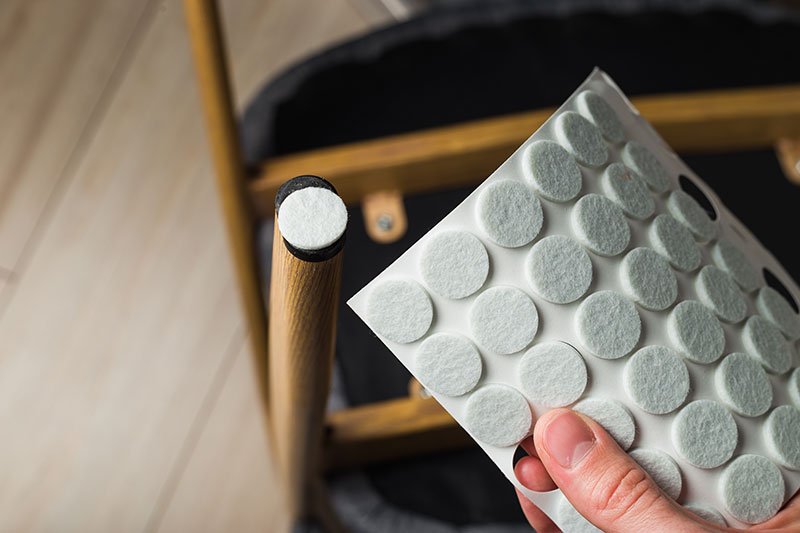
• Dining chairs and stools: Wool or high-wool felt, firm density, 5 mm thick, diameter 3 to 5 mm wider than the foot.
• Sofas and credenzas: Extra-firm 8 mm felt or screw-on UHMW cups with replaceable felt inserts.
• Metal sled bases: Clip-on sled glides with felt inserts along the runners.
• Pianos and armoires: Wide hardwood-safe caster cups that spread load.
• Avoid: Black rubber, PVC pads, thin craft felt, nail-in metal glides.
Specification note: wipe feet with isopropyl alcohol, square the contact face with a light sand, deburr edges, then apply. Adhesives bond better on clean, flat substrates.
III. Week-By-Week Cure Calendar To Share With Clients
Days 1–3
Socks or soft soles only. No furniture or rugs. Hold 35 to 50 percent RH and steady airflow.
Days 4–7
Bring in essentials using sliders or blankets. Pads on before contact. Lift and carry. No rolling loads. No rugs.
Days 8–14
Add breathable entry mats. On waterborne systems, allow low-pile rugs with hardwood-safe felt or felt-rubber pads after day 10. Damp clean only with a barely moist microfiber, then dry to zero.
Days 15–30
On oil-modified systems, delay rugs until day 21–30. Maintain pad inspections and grit control.
Embed this calendar in your install brief and on the client’s fridge as a one-pager.
IV. Staging Moves For Trees, Pianos, And Extra Seating
• Tree platform: Rigid tray or decorative plinth larger than the stand, thick felt beneath, daily water check. No raw plastic or metal edges on finish.
• Piano route: Plywood runways with rosin paper on top, then caster cups at final position. No pivot turns on fresh film.
• Borrowed chairs: Pre-pad all folding legs before they touch wood. Keep a small pad kit on site.
• Rugs: Use breathable pads only. Skip tapes on wood. If grip is needed, specify low-tack products labeled finish-safe.
• Lifts, not drags: Two-person lifts or thick sliders for sofas and buffets.
• Entry grit control: Two-mat system with a boot tray on tile before anyone reaches hardwood.
• Heat awareness: Lanterns and space heaters sit on ceramic or metal stands. Warm finish dents more easily.
V. Photo-Day Checklist For Stylists
• Inspect pads and replace anything shiny or compressed.
• Vacuum with a hard-floor head, no beater bar.
• Damp wipe high-gloss props off the floor. Condensation rings are the enemy.
• Keep a microfiber in pocket for quick dry-to-zero passes where hands move décor.
VI. Cleaning Rules During The First Month
• Daily dry dust-mop with microfiber; shake out over tile.
• Weekly vacuum with a soft hard-floor head.
• Spot clean with a pH-neutral hardwood cleaner on a barely damp microfiber, then dry immediately.
• Never use steam, vinegar, ammonia, oil soaps, abrasive powders, or acrylic polishes.
VII. Kid, Pet, And Party Realities
• Smooth pet nails and consider temporary booties in week one.
• No toy vehicles on wood until full cure.
• Place washable runners with breathable pads under crafting or bar setups.
• Stage a “parking zone” for wet boots away from wood.
VIII. Troubleshooting Script You Can Paste Into Client Notes
• White ring by a planter or drink: Remove source, add gentle airflow, do not scrub. Call the finisher with product details.
• Fine scratch: Avoid dark stain markers. Many buff out at the next maintenance recoat.
• Small dimple: Move to a larger pad that spreads load. Some compressions relax as cure completes.
• Grit tracks: Reset mat plan and re-inspect chair feet for missing or glazed pads.
IX. Designer Deliverables To Hand Off With The Room
• One-page cure calendar with safe dates for rugs and staging.
• Pad map by furniture piece and quantities for reorders.
• Entry and cleaning plan: two-mat layout, approved cleaner brand, and a dry-to-zero reminder.
• Small on-site pad kit: assorted felt discs, screw-on cups, sliders, alcohol wipes, scissors.
These simple handoffs reduce callbacks and keep your project looking flawless through the season.
X. Spec Box For Your Project Binder
• Pads: Wool felt, firm 5 mm for chairs, extra-firm 8 mm for case goods.
• Casters: Soft urethane on task chairs or a flat-weave rug with felt-rubber pad.
• Rug pads: Breathable felt or felt-rubber blends labeled hardwood-safe.
• Climate: 35–50 percent RH, steady airflow.
• Cleaning: Neutral pH cleaner, barely damp microfiber, dry to zero.
• Prohibited: Black rubber, PVC pads, tapes on wood, steam, vinegar, ammonia, oil soaps.
Copy, paste, and print.
Use this as a quick “ready for guests” checklist for new floors:
- Pads installed on all chairs, stools, sofas, and extra seating before they touch the floor
- Cure calendar shared with the client, including safe dates for rugs and heavier staging
- Rug pads confirmed as breathable, hardwood-safe felt or felt–rubber blends (no PVC or black rubber)
- Tree stand sitting on a rigid platform with thick felt beneath and daily water checks scheduled
- Routes for pianos and heavy pieces planned with plywood runways and caster cups at final positions
- Walk-off system in place at entries: exterior scraper mat, interior absorbent mat, and boot tray off the wood
- Cleaning kit ready: hard-floor vacuum head, dry microfiber mops, and pH-neutral hardwood cleaner only
- Temporary runners placed with breathable pads under bar areas, crafting zones, or high-traffic buffet lines
- Pet nails and party “heels and wheels” rules communicated (no toy cars, no stilettos on fresh film)
- Photo-day routine set: inspect and replace any glazed pads, vacuum, then quick dry-to-zero microfiber pass before styling
FAQs
How soon can my client put rugs on newly finished hardwood floors?
On most professional waterborne finishes, plan for low-pile rugs with breathable, hardwood-safe pads after about 10 days, assuming normal conditions and 35–50% RH. For oil-modified polyurethane, stay conservative and wait 21–30 days before placing area rugs. Rugs too early can trap moisture, imprint patterns, and slow cure.
What furniture pads are safest for holiday staging on new floors?
Use firm wool felt pads (about 5 mm thick) on dining chairs and stools, and extra-firm 8 mm felt or screw-on cups with replaceable felt inserts under sofas, credenzas, and heavy case goods. Avoid black rubber, PVC pads, thin craft felt, and nail-in metal glides since they can stain, compress quickly, or cut into a soft film during the first month.
Can I move heavy pieces like pianos or buffets onto fresh floors before a holiday event?
Yes, but only with protection and planning. Use rigid plywood runways with paper on top for the move, then place the piece on wide, hardwood-safe caster cups or large felt-backed feet at the final position. Avoid pivot turns on the spot, dollies with small hard wheels, and any dragging. All pads and cups must be in place before the furniture touches the floor.
How do I safely stage a Christmas tree on newly refinished hardwood?
Place the stand on a rigid tray or decorative platform that is larger than the stand, then pad beneath with thick wool felt. Check water daily so the tray never overflows, and never let raw metal or plastic edges contact the finish. Avoid waterproof membranes that trap moisture directly against the wood.
What cleaning rules should clients follow during the first month after finishing?
Keep it dry and gentle. Use daily dry dust-mopping or vacuuming with a hard-floor head, then spot-clean only with a pH-neutral hardwood cleaner on a barely damp microfiber, immediately dried to zero. No steam mops, vinegar, ammonia, oil soaps, “polish and shine” products, or abrasive powders. These can haze or soften a curing film and complicate future maintenance recoats.
Is it safe to host a large holiday party on new floors?
It can be, if the staging matches the cure calendar. Ensure all furniture is pre-padded, add walk-off mats and runners at entries and bar areas, enforce a no-drag rule for chairs, and control grit with frequent vacuuming before and after. In the first 7–10 days, keep guest traffic lighter if possible; after that, well-protected floors with proper pads and mats generally tolerate normal hosting.
Request A Quote!
Since 1922, Ottawa homes have trusted heritage craft paired with practical discipline. Early care is not about saying no to living. It is about saying yes to small, predictable steps that let the season shine while the finish hardens quietly underneath.
Serving Ottawa since 1922 as the only third-generation hardwood specialist in the region.