
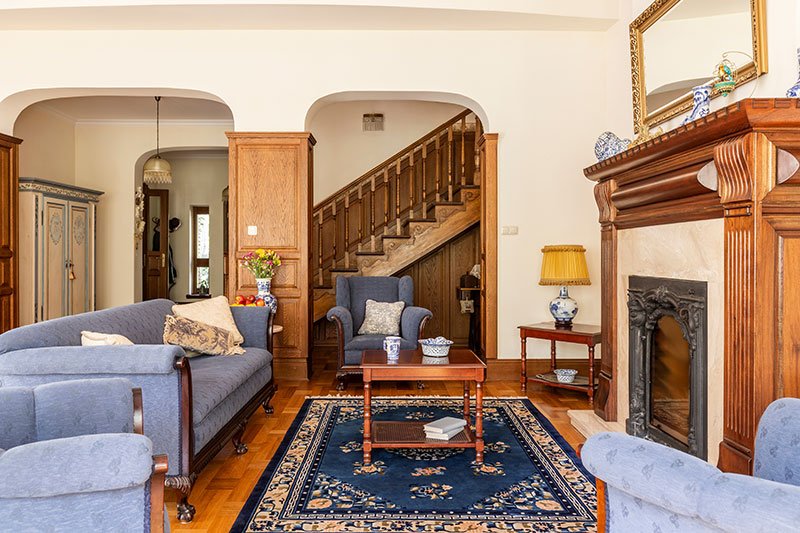
Historic floors read like time itself.
Boards are steady and narrow, seams fine as pencil marks, grain calm and sure. If your heritage home carries a 3 to 5 inch pattern, the goal is not to “find wood that fits.” The goal is to capture the rhythm, tone, and joinery of an era, then install it with today’s stability and care so the floor lives gracefully through Ottawa winters.
Proofpoint. Royal Hardwood Floors is Ottawa’s only third generation hardwood specialist. Since 1922 our family has sourced, milled, and restored historic 3 to 5 inch patterns for embassies, government buildings, and period residences across the National Capital Region.
I. Read the original: width, pattern, and pace
Before anyone orders a plank, we document the floor’s language.
- True face width. A “four inch” historic board often finishes near 3⅞. We measure several rooms and match finished width, not catalogue width.
- Run length and staggering. Period rooms favored longer average lengths with reserved staggering. We replicate that cadence so seams do not chatter in raking light.
- Edge geometry. Micro bevels are modern. Historic floors were square edged or hand eased. We specify true square and finish them flush.
- Nailing pattern. Most Ottawa era floors are blind nailed tongue and groove, yet borders and thresholds can show discreet face nails. We note and reproduce where appropriate with cut nails set tight and finished clean.
This survey becomes the template for every board we source or mill.
II. Species and cut: old-growth character without the fairy tale
Old-growth is a story of slow rings and thoughtful cutting.
- White oak and red oak. The backbone of regional houses. For quiet grain and the ray fleck seen in prewar work, we favor rift and quartersawn selections or a mixed R/Q field for balance.
- Eastern maple and yellow birch. Often used in narrower widths for a refined, pale field. We temper sheen to avoid a plastic read.
- Heart pine and fir. For specific Victorian or craftsman restorations we reclaim tight ringed timbers that carry amber warmth with dignity.
Cut matters. Rift reads linear and stable. Quartered adds medullary rays that shimmer gently in winter light. The right mix brings movement and calm into conversation.
III. Sourcing pathways: reclaimed, salvaged, or newly milled to spec
Three honest routes reach the 3 to 5 inch look.
- Reclaimed boards from deconstruction
Pros include real patina and tight rings. Expect higher waste and meticulous metal detection. Best for parlours, entries, and thresholds where authenticity is the headline. - Salvaged stock from heritage yards
Pros include bundles already sorted to the right range. Milling standards vary, so we plan light edge tuning. Ideal for patches and feathered repairs that do not require sanding an entire level. - Newly milled R/Q boards from slow growth logs
Pros include consistent tongues, longer runs, square edges, and dialed moisture content. Best for whole rooms or full floors where performance and fit must be exact. Patina is created through finishing, not faked.
Many projects blend paths. Reclaimed boards frame doorways and hearths. Newly milled R/Q boards build the quiet body where stability matters most.
IV. Why 3–5 inch widths behave beautifully in winter
Ottawa’s cold dries interiors. Narrower boards spread seasonal movement across more seams so winter gaps remain fine and regular.
- Target moisture. Receive at 6 to 8 percent, acclimate slowly, verify with calibrated pin and pinless meters.
- Room strategy. In parlours, a consistent 3⅞ reads period correct. In larger salons, alternating 4 and 5 inches lifts the visual without drifting modern.
The eye reads restraint as elegance. The floor returns the favor with stable seams in February.
V. Lengths, joints, and borders: the architecture inside the floor
- Average length. We push longer than commodity packs to calm the field and reduce butt joints.
- Feathering repairs. When weaving new into old, we feather at least four boards deep on both sides of the seam to prevent a zipper line.
- Period borders. Picture frames and dark feature strips appear in many prewar homes. We reproduce in the correct species and geometry, set square, and bury under a unified finish so the room reads as one.
Transitions tell the truth. If the border language is wrong, the room never feels historic.
VI. Subfloor prep, adhesives, and fasteners: modern quiet, historic grace
We want the floor to look a century old and sound like a library.
- Subfloor. Screw sink the deck, plane or shim crowns, and eliminate friction points. Silence begins below the wood you see.
- Adhesive strategy. Over plywood we favor full spread elastomeric adhesive plus mechanical fastening to prevent hollow spots. Over diagonal plank subfloors common in heritage homes we often run a hybrid: targeted adhesive beads to stop chatter, then blind nail to a period spacing.
- Fasteners. Steel cleats sized to species and thickness. Cut nails placed only where history shows them and set carefully, with color matched putty if the story calls for a discreet witness.
The result is a floor that glides underfoot and never calls attention to what holds it together.
VII. Color and patina: making new boards live in an old room
Matching tone is more than choosing a brown.
- Reactive base where appropriate. On oak, controlled tannin reactive steps create an aged undertone that stain alone cannot. We test on your boards, in your light.
- Stain layering. Thin, even coats preserve grain and avoid mud.
- Edge integration. After sanding we hand break sharp edges so light does not specular pop along too crisp lines that would read modern.
- Sheen. Satin or matte. High gloss is rarely period correct and will telegraph every future rub in winter sun.
At thresholds we often tune color slightly warmer to meet sun faded originals so the transition feels inevitable.
VIII. Sampling that predicts reality
A hand chip lies. Use big boards and winter light.
- Minimum two full boards wide with an end joint, finished with the exact system you plan to use.
- Place samples in front of the largest window, across a hallway, and at a shaded interior wall.
- Evaluate at 9 a.m., 1 p.m., and 4 p.m. when snow glare is honest.
- Approve only the variant that holds its poise through all three reads.
IX. Cleaning and care expectations for historic look floors
A 3 to 5 inch field rewards quiet habits.
- Daily dry microfiber.
- Weekly neutral pH cleaner on a barely damp pad, then dry to zero.
- Hold indoor humidity near 35 to 45 percent to moderate winter gapping.
- Plan a professional screen and recoat on a steady rhythm to preserve sheen and color unity without erasing patina.
These floors are not fragile. They are honest wood, finished properly, that benefits from gentle hands.
X. A ready to use specification for procurement
- Species and cut. White oak, mixed rift and quartered. Face widths 3⅞, 4, and 5 inches per room plan.
- Moisture and acclimation. Deliver at 6 to 8 percent. Acclimate 5 to 7 days with HVAC at living conditions. Verify with calibrated meters.
- Milling. Square edge, tight tongue and groove, end matched, longer than average lengths.
- Subfloor tolerance. Flatten within 3 millimeters over 2 meters. Screw sink and shim as needed. Silence test before installation.
- Install. Full spread elastomeric adhesive over plywood or hybrid beads over diagonal plank, plus cleat nailing per schedule. Face nails only where historically present.
- Borders. Picture frame per original geometry. Optional contrasting strip per period photos.
- Color system. Site samples to approval in natural and electric light. Reactive base only if approved. Matte or low satin topcoat.
- Finish. Commercial waterborne polyurethane, two to three coats. Hand ease edges post sand. Unified sheen across old and new.
- Protection. Ram board during other trades. No wet cleaning for ten days after final coat.
This spec keeps decisions grounded in craft, not guesswork.
FAQs
Can new wood truly match my 1930s floor.
Yes. Match finished width, milling style, and edge geometry, then tune color with reactive undertones and layered stain. The result reads original.
Reclaimed or newly milled.
Use reclaimed at focal lines and transitions. Use newly milled R/Q for the body where stability and fit are critical.
Will narrow boards gap in winter.
All wood moves. At 3 to 5 inches the movement spreads across more seams so winter gaps stay fine and regular when humidity is held near 35 to 45 percent.
Do I need high gloss to look historic.
No. Satin or matte is truer to period work and kinder to winter glare.
How do you weave repairs invisibly.
Feather at least four boards deep on both sides, match average lengths, and set borders to period geometry before a unified finish.
Book a heritage floor review
If you want the quiet authority of a true 3 to 5 inch old-growth look, book a free quotation. We will document your original widths, species, and border language, present reclaimed, salvaged, and newly milled pathways, and deliver full size samples toned to your winter light so the new reads as if it has always belonged.
Serving Ottawa since 1922 as the only third-generation hardwood specialist in the region.