
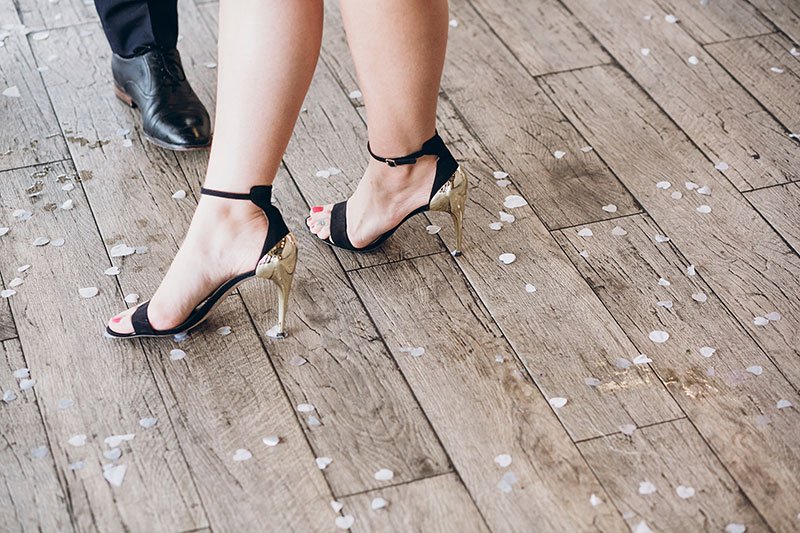
From 300 guests to spotless by dawn.
A great ballroom looks effortless the morning after. That result is not luck. It is a repeatable plan that protects the floor before the first song, routes heavy gear without crushing edges, dissolves syrupy spills without harming finish, patches small wounds between back-to-back events, and inspects like a hawk so you never stumble into wedding season with tired lanes. Here is your step-by-step playbook for restaurants, hotels, and event venues.
I. Pre-event protection for podiums, dance floors, and buffet lines
Set the floor up to win before doors open.
- Podiums and staging. Use clean plywood underlay or composite protection panels beneath podium feet and risers. Add felt sliders under all contact points so the reset crew can move them without gouging.
- Modular dance floors. Confirm edges sit flush with adjacent wood so heels do not catch. If your permanent floor is also your dance surface, mark out the footprint in the run-of-show and drop high-density textile at the DJ booth and the first metre in front of the band where cables and mic stands migrate.
- Buffet and bar lines. Lay premium runners with wood-safe backing along the guest approach and the staff side. These absorb drips and mute traffic without screaming “temporary.” Launder truly dry before reuse, since damp textiles re-deposit residue at edges.
- Door discipline. Post a service-door spotter to keep vestibules closed during load-in. Cold air swings and wet wheels accelerate wear at thresholds.
II. Rolling stage and AV gear plans that do not crush edges
Carts and stacks are not the enemy. Point load and grit are.
- Caster spec. Soft, non-marking wheels only. Replace glossy or chipped wheels before the event.
- Clean-wheels policy. Nothing crosses the ballroom without a towel wipe at the door. Stage a small “wheel wash” station for quick compliance.
- Protected routes. Build a temporary highway of walk-off tiles from the dock to the stage and from storage to head table. These capture grit and spread load so edges do not bruise.
- If gray tracks appear. When a lane looks dull even after cleaning but pops richer when slightly damp, the wear is in the film, not ground-in soil. Put that zone on the list for a maintenance screen and coat: clean, light screen to key the surface, then two coats to reset protection and sheen.
III. Neutral cleaner dosing for sticky spills
Confetti, prosecco, simple syrup, red wine. The cocktail of residue that destroys traction.
- Dose, do not dump. Keep labeled spray bottles of true pH-neutral hardwood cleaner at each door and at the AV table. Mist the spill onto a microfiber cloth, wipe, then dry with a second cloth.
- Storm cadence. During dessert and last call, schedule a roaming spot-team to hit the bar path, the champagne-tower approach, and the photo-booth queue every 30 minutes.
- Never list. No vinegar, no ammonia, no oil soaps, no silicone quick-shine. These leave films that haze, change friction, and complicate professional recoats. Water-based polyurethane systems are compatible with neutral cleaners and support fast overnight recoats when needed, with very low odor and short dry windows.
IV. Spot repair techniques between back-to-back events
You have six hours. Triage like a pro.
- Finish-only scuffs. If the mark disappears when lightly damp, blend with a wood-tone pencil, buff with microfiber, then leave the area dry.
- Edge nicks at thresholds. Fill tiny corner losses with color-match putty, wipe clean, and schedule a localized screen and coat after the weekend.
- True material damage. For crushed edges, deep gouges, or water-stained planks, log the location for surgical replacement. Our repair team routinely swaps individual boards, matches species and grain, and blends stain so the patch disappears, even on older floors with challenging patina. We handle severe splitting and buckling as standard work.
V. Overnight recoat option for a showroom reset
When the room must glow again by breakfast, a maintenance recoat is your friend. With modern water-based polyurethane, dry times are roughly two hours between coats, which allows multiple coats in a single night under supervision and a morning socks-only walkthrough.
Use satin in ballrooms to diffuse glare in photography while preserving a refined sheen. If this is your first recoat, run a small test rectangle behind the head table during setup to confirm the sheen match.
VI. Monthly inspection points that predict failure before wedding season
Thirty minutes a month prevents panic in May.
- Thresholds and elevator edges. Look for whitening or gray half-moons. If visible after correct neutral cleaning, tag for a localized recoat cycle.
- Dance arc and band edge. Kneel and sight the first metre from the riser. Micro-scratching here forecasts a spring refinish if you do not recoat.
- Chair glide health. Audit ten chairs from each bank. Screw-on or tap-in felt cups only. Adhesive dots shear and collect grit, which turns chairs into sanders.
- Subfloor quiet check. Walk a figure-eight and mark any click or chirp. Many squeaks are solved with targeted fastening before you refresh the film and avoid a noisy season.
- Color consistency. If sun patches or colored lighting have unevenly aged the finish, schedule a controlled refinish of the affected zone. Refinishing to fresh wood, stain, and new finish often beats replacement on both cost and disruption, and restores protection against water, dirt, and scratches.
VII. What your night crew needs to execute flawlessly
- Run-of-show map with protection zones and cart routes.
- Two carts stocked with microfiber, neutral cleaner, dry towels, and spare felt glides.
- Wheel wash station at each entry during load-in and load-out.
- Photo protocol for any incident that might drive a claim: wide shot, close-up with scale, and after-containment shot.
- Morning reset checklist so tables return with fresh glides and rugs stay off several days after any recoat, allowing the film to build early hardness under fabric.
Quick checklists
Before doors open
□ Protection under podium and risers
□ Premium runners at buffet and bar lines
□ Wheel routes laid with walk-off tiles
□ Neutral cleaner bottles staged at entries
During the event
□ Spot team roams every 30 minutes
□ Wheel wash enforced for carts
□ Threshold edge-wipes on the hour
After the event
□ Triage: finish scuff vs gouge
□ Log true damage for surgical swap
□ Decide: recoat overnight or schedule monthly window
FAQs
How do we clean sticky spills without hurting finish or traction?
Use a true pH-neutral hardwood cleaner on microfiber, wipe, then dry. Avoid vinegar, ammonia, oil soaps, and silicone quick-shine.
What is a maintenance screen and coat in one line?
A clean and light abrasion of the existing finish followed by two fresh coats to restore protection and sheen without sanding to bare wood.
Can we recoat overnight and reopen in the morning?
Yes. Water-based polyurethane is very low odor and dries in about two hours between coats, so multiple coats happen in one night with a morning socks-only walkthrough.
What if a plank is crushed during load-out?
Schedule a surgical board replacement. We match species and grain and blend stain so repairs disappear. Even severe splitting and buckling are routine.
Is replacement smarter than refinishing when the dance arc looks tired?
Often no. Refinishing restores protection against water, dirt, and scratches and usually costs less and disrupts less than replacement.
Book A Free Quote!
Book a banquet turnover training for your night crew. We will map protection zones, set cart routes, calibrate neutral cleaner dosing, and stage an overnight recoat plan so your ballroom looks camera-ready by dawn.
Serving Ottawa since 1922 as the only third-generation hardwood specialist in the region.