
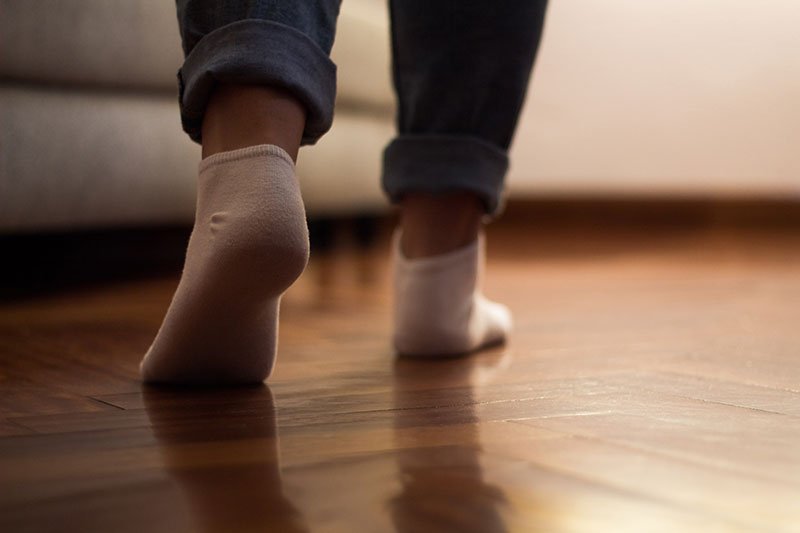
The quietest habit in a well cared for home is also the most powerful.
Shoes pause at the threshold. Slippers cross hardwood like soft punctuation. The grain stays crisp. The sheen holds. Rooms look settled even on a busy weeknight. A no shoe policy is not etiquette. It is a floor protection system that cuts abrasion, shortens cleanup, and extends finish life in ways you can track.
Proofpoint. Royal Hardwood Floors is Ottawa’s only third generation hardwood specialist. Since 1922 we have maintained floors in family homes, heritage residences, and embassies. Across thousands of service visits, homes that keep a consistent no shoe rule show fewer micro scratches in traffic lanes and longer intervals between maintenance coats.
I. Why shoes damage hardwood
Hardwood is resilient, yet grit behaves like sandpaper under pressure. Outdoor shoes collect silica grains, driveway grit, winter salt crystals, and tiny mineral fragments lodged in tread patterns. Each step presses those particles into the finish and polishes high points into haze. Add heel pressure and pivoting and abrasion accelerates. A no shoe household blocks the gritty load at the door, removes high pressure points from hard soles, and reduces moisture and salt that can bloom the film. These are not vague claims. You can measure the effect in your own rooms.
II. The measurable gains you can expect
- Lower abrasive load at entries. Entry lanes collect less sand and salt when shoes come off, so sheen loss slows.
- Longer maintenance intervals. With abrasion reduced, many homes extend time between maintenance coats by a season or more.
- Faster cleaning. Dry dust mopping is quicker because you are lifting household dust, not outdoor grit bonded with moisture.
- Quieter acoustics. Without hard soles, floors sound solid and calm, not ticked and clicked.
III. A simple home test for abrasive load
You do not need a lab to quantify grit. Use a kitchen scale and a routine.
- Stage mats on non wood. Scraper outside, absorbent inside, then hardwood.
- Collect and weigh. Each night for one week, sweep only the first two meters of hardwood past the interior mat into a clean dustpan. Empty into a paper cup and weigh on a kitchen scale. Record the number.
- Change one habit. Enforce shoes off for the next week and repeat.
- Read the result. Most homes record a clear drop in collected grit. Even a small reduction translates directly into fewer scratches over the season.
No scale. Compare volume in identical cups. Less grit is visible.
IV. A visual test for sheen preservation
Finish microtexture scatters light. Abrasion polishes high points and creates haze.
- Choose two lanes. Front entry and the path from kitchen sink to island.
- Photograph weekly. Kneel and shoot along the floor toward the window at the same time each Sunday.
- Compare. In no shoe homes, the gray cast that begins in week one often levels off. In shoe on homes, it grows and moves toward wet work areas, where moisture bonds grit to the film.
If haze persists with shoes off, review chemistry. Residues from all purpose cleaners can mimic wear. Use a pH neutral wood floor cleaner on cloth, then dry buff.
V. Quiet benefits you feel underfoot
- Less winter salt. Salt crystals crush and leave white trails that penetrate micro scratches. Removing shoes stops the source.
- Lower point pressure. Heels concentrate force. Bare feet and slippers distribute weight and reduce dents and friction trails around stools and tables.
- Cleaner air. Shoes track outdoor particulates past the entry. A no shoe rule cuts airborne dust that resettles on floors and furniture.
VI. How to set the rule so it actually sticks
Rules fail when the threshold is vague or uncomfortable. Make compliance the easy choice.
- Create a sitting moment. A sturdy bench with felt glides invites the pause.
- Offer a soft landing. Keep a labeled basket of clean slippers in several sizes.
- Use a two stage mat system on non wood. Scraper outside, absorbent inside, then wood. Mats never sit on hardwood.
- Provide storage. Two open baskets marked “Drying” and “Ready” keep the entry neat.
- Sign gently. A small card that reads “Shoes rest here so the floors stay beautiful” is friendly and clear.
Households with pets can add a towel for paws. Small rituals spare finishes from winter salt and summer mud.
VII. Addressing common objections
- “My floors are engineered and tough.” The core manages humidity swings, but the surface film still scratches. Less grit still means longer life between recoats.
- “We host often.” Offer slippers and disposable boot covers at the door. A bench and visible slippers do the talking.
- “It will look fussy.” A staged entry looks intentional. The quiet shine of the floor is the lasting impression.
- “Kids run in and out.” Add a second scraper just inside the garage. Shoes off on non wood before feet hit hardwood. Consistency beats correction.
VIII. Chair glides still matter
No shoe households reduce grit, but chairs move every day. Protect at the contact points.
- Use dense felt pads at least 5 millimeters thick under every leg.
- Replace matted pads monthly in winter.
- For heavy stools, consider PTFE sliders with felt faces to spread load and prevent friction trails.
If gray arcs develop around the dining table even with shoes off, worn pads are almost always the culprit.
IX. Maintenance intervals you can plan
Shoes off today becomes time saved tomorrow.
- Daily. A quick dry dust mop in busy rooms.
- Weekly. Vacuum edges, spot clean with cleaner on cloth, then dry buff.
- Seasonally. Review pads and entry mats and replace what looks tired.
- Long term. Many no shoe homes schedule maintenance coats on their terms, not because dull lanes force a rescue mid season.
The goal is not never to recoat. The goal is to preserve clarity so maintenance is a planned refresh.
X. A ready to use entry plan
- Bench with felt glides and a tray beneath for stray meltwater
- Scraper mat outside, absorbent mat inside on tile or stone
- Labeled slipper basket with multiple sizes
- Two baskets for shoes: “Drying” and “Ready”
- Discreet reminder card near eye level
- Envelope of spare chair pads taped under the dining table
- Daily check of boot tray in winter; empty salt water before it spills
XI. Quick reference checklist
- Stage bench, two mats on non wood, and a slipper basket
- Enforce shoes off at the threshold, not in the kitchen
- Run a one week grit test before and after the policy to measure gains
- Photograph two lanes weekly in raking light to track sheen
- Keep dense felt under every chair leg; refresh monthly
- Clean with pH neutral hardwood cleaner on cloth, then dry buff
- In winter, empty boot trays daily and sweep thresholds to keep salt off wood
FAQs
Will a no shoe policy really change maintenance costs?
Yes. Reduced abrasion often adds months to a maintenance coat cycle and lowers day to day cleaning time.
Are rubber backed rugs safe for entries?
Avoid solid rubber and PVC on hardwood. Place rugs on tile or stone with a breathable, hardwood safe underlay.
What about guests who cannot remove shoes?
Offer medical shoe covers or clean slippers. Provide a stable bench for ease and dignity.
Do slippers scratch?
Soft soled slippers with clean bottoms are gentle. Avoid outdoor soles worn indoors.
We already see haze. Did we wait too long?
Not necessarily. Try a neutral cleaner on cloth and a dry buff. If lanes remain dull, schedule a maintenance screen and recoat before wear reaches color.
Book a No-Shoe Entry Planning Call
Want a printable entry setup, pad recommendations, and a one page tracker for your own grit and sheen tests. Book a free guidance call. We will confirm your finish type, specify exact mats and glides, and give you a step by step plan that protects your floors and simplifies your routine all winter and beyond.
Serving Ottawa since 1922 as the only third-generation hardwood specialist in the region.