
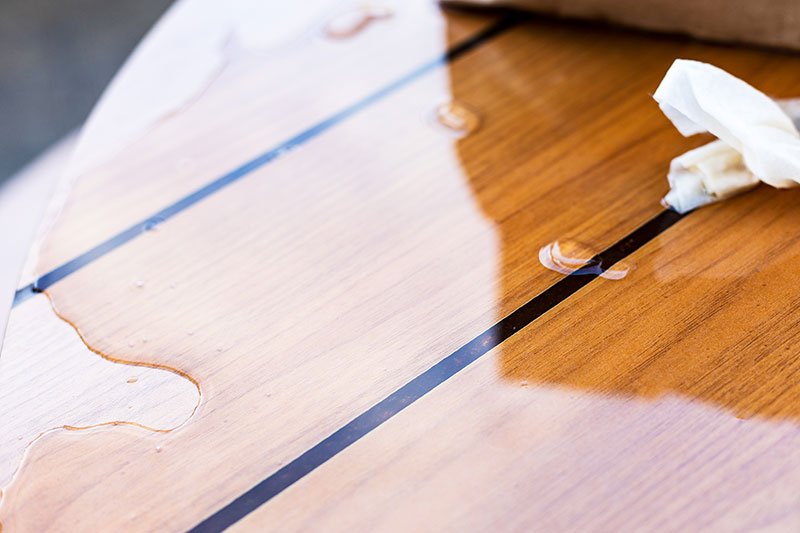
When water hits wood, minutes matter.
Water does not ask permission. A radiator valve burps at 2 a.m., a ceiling pipe weeps over a corridor, or a salt-soaked mat collapses and leaves a white crater by the host stand. In hospitality settings, the clock starts immediately. This guide gives your managers a first-hour script, a triage method to separate cleanable marks from true stains, and a plan for temporary protection, surgical board replacement, and insurer-friendly documentation. The result is simple. Guests stay safe, the room keeps earning, and the floor survives the storm.
I. First hour: what managers do before we arrive
Speed and sequence are everything.
- Stop the source
Shut water at the nearest valve. If a radiator or supply line is involved, close feeder valves and tag the zone for engineering. - Blot, do not flood
Use clean towels to blot standing water. Avoid saturating wood with mop water. Liquids and seams are not friends. - Lift, label, and log
Lift saturated mats and set them vertical to dry away from wood. Label the area with cones or signs to prevent slip incidents. - Edge pass
Wipe the first two metres past any tile-to-wood threshold. Brine wicks quickly into end grain at transitions. - Photos now, not later
Take wide shots and close-ups from four angles. Include a simple ruler or receipt in one frame for scale. This is gold for claims. - Call us and keep the zone clear
We will advise whether to hold service in that area or reroute guests. If the affected lane looks dull but appears richer when slightly damp, note that. It signals finish wear and a likely screen-and-coat fix after dry-down, not replacement.
II. Triage: water marks versus true stains
Not every mark is permanent.
- White rings or cloudy patches
Often moisture trapped in the finish. If wood is not gray, we can usually reset with a maintenance recoat after the area is bone-dry. A professional recoat means we clean, lightly screen to key adhesion, then apply two coats of finish. - Dark, gray, or black areas
Moisture has reached the fibers and reacted with tannins. Plan on a sand-to-fresh-wood in that zone, and if necessary a small board swap before finishing. Refinishing restores protection against water, dirt, and scratches and often costs less than ripping out large sections. - Salt craters and white halos at entries
These are alkaline residues. Neutralize with a pH-neutral hardwood cleaner on microfiber, then dry. If a halo returns as soon as it dries, the film is worn thin and ready for a recoat cycle.
III. Temporary matting that saves finish during leak cleanup
Contain the mess without creating a bigger one.
- Use launderable textile runners labeled safe for finished wood. Avoid rubber or PVC that can imprint.
- Place walk-off tiles from the leak path to the service door to stop grit and keep wet wheels off wood.
- Keep everything dry. Damp textiles re-deposit salt at edges and extend the damage. Swap them as soon as they feel heavy.
IV. Board replacement criteria and how we match species and grain
Managers ask when to replace versus refinish. Here is the simple rule.
- Replace surgically when a plank is split, cupped, or permanently stained through the fiber. Our crew staggers new boards, matches species, and blends stain so repairs disappear. This is routine, even after severe splitting or buckling.
- Refinish or recoat when damage is superficial. If the mark is in the finish, we recoat. If gray has reached the wood, we refinish that zone to fresh wood, stain, and protect. In both cases you protect the surrounding floor and avoid unnecessary tear-out.
V. Finish choices for fast recovery in occupied spaces
After emergency dry-down and any repairs, choose the chemistry that keeps you open.
- Water-based polyurethane is clear, very low odor, and dries within about two hours between coats, which lets us apply multiple coats in one night under supervision. That means morning socks-only walkthroughs and careful furniture reset while rugs wait a few days to let the film build early hardness under fabric.
VI. Cleaning protocols that do not push the problem around
Well-meaning staff can make things worse with the wrong product.
- Split the kits
Kitchen chemicals stay in the kitchen. Dining wood gets pH-neutral cleaner, microfiber, and a dry follow. Vinegar, ammonia, oil soaps, and silicone “quick-shine” are off the list. They haze, change traction, and complicate future recoats. - Storm cadence
Spot-neutralize every 60 to 90 minutes near leak routes or doors. Dry immediately.
VII. Insurance photos and documentation that make claims easy
Your insurer wants clarity and sequence.
- Photo set
Start-of-incident wide shots, close-ups with scale, interim containment, and final repairs. - Short incident log
Time discovered, source shutoff time, square metres affected, actions taken in the first hour, and vendor called. - Repair scope and method
We document whether we recoated, refinished, or replaced boards, the finish used, and dry windows. This mirrors our standard documentation used across residential, commercial, and governmental projects since 1922.
VIII. Cost and downtime expectations for managers
- Targeted recoat
Fastest, most economical. Clean, screen, two coats. Overnight return to service with low odor. - Localized refinish
Needed when gray has set into wood. Sand to fresh wood, stain, protect. Still far less disruption than replacing large sections, and it restores resistance to water, dirt, and scratches. - Surgical board replacement
For isolated planks that are split or stained through. We stagger seams and blend color so guests never see the patch.
Quick checklists
First hour
□ Shut source and tag zone
□ Blot, do not flood
□ Lift wet mats, label area
□ Edge-wipe first two metres past tile
□ Photo set: wide, close, with scale
□ Call RHF for triage advice
Triage
□ White haze only → recoat candidate
□ Gray in wood → localized refinish
□ Split or cupped plank → replace surgically
Containment
□ Launderable runners with wood-safe backing
□ Walk-off tiles on wheel routes
□ Keep textiles dry and swap often
FAQs
What is “screen and coat” in one line?
A clean and light abrasion of the existing finish, then two new coats to restore protection and sheen, used when damage is in the film.
Which finish lets us reopen next day without odor complaints?
Water-based products are clear, very low odor, and dries in about two hours between coats, so multiple coats can be applied overnight.
How do we know if a dark spot needs sanding or board replacement?
If the wood fiber has darkened through, we refinish that zone. Replace only when a plank is split, cupped, or permanently stained beyond repair.
Do you actually handle severe damage in commercial settings?
Yes. We are known as the Old Wood Floor Doctor and repair even severe splitting and buckling, then blend work to match.
Our insurance will cover to pay for damages. Do you accept insurance jobs?
You can arrange with your insurer for them to make the check to ‘your name’, and you pay us when the work is done. We specify this because insurance companies pay 3 months after work done. We do not accept that process. Our policy is job done, job paid.
Book A Free Quote!
Save our emergency number and ask for the checklist PDF. We will deliver a first-hour script for your managers, place data loggers where needed, and map recoat, refinish, or surgical board replacements so the room stays open.
Serving Ottawa since 1922 as the only third-generation hardwood specialist in the region.